

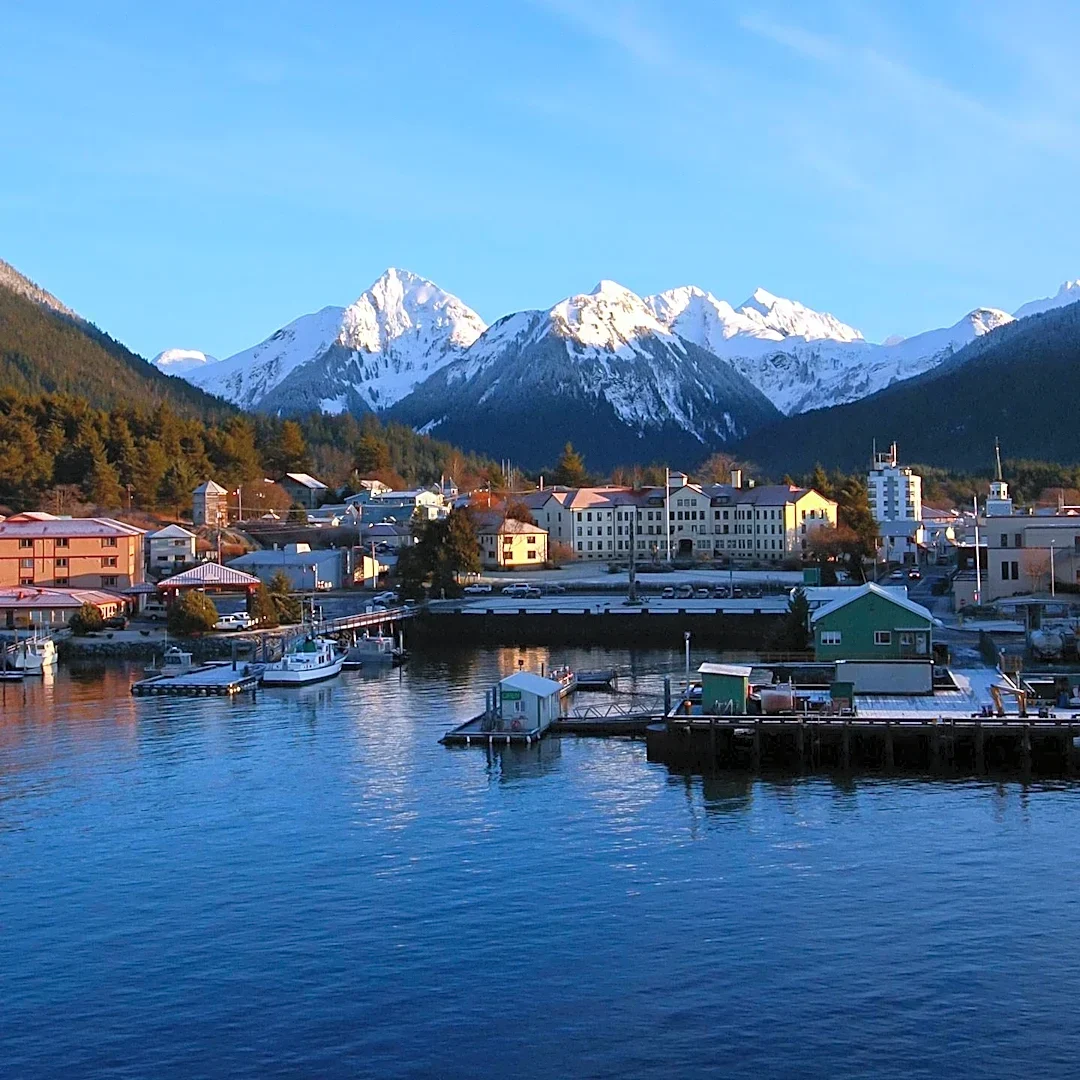




On October 18, 1867, a pivotal moment in American history unfolded as the United States formally acquired Alaska from the Russian Empire. This significant transaction, known as the Alaska Purchase, had been ratified by the U.S. Senate on April 9, 1867, marking the legal transition of sovereignty. The formal transfer ceremony, a blend of military precision and diplomatic protocol, took place in Sitka, then known as Fort Sitka, solidifying the United States'
presence in the vast northern territory. This event is commemorated annually as Alaska Day, celebrated every October 18th.
The Ceremony in Sitka
The transfer ceremony itself was a carefully orchestrated affair, detailed by accounts from the time. In Sitka, Russian and American soldiers paraded in front of the governor's house. The Russian flag, emblazoned with a double-headed eagle, was lowered, and the American flag, with its stripes and stars, was raised. This symbolic exchange was accompanied by artillery salutes, marking the official change of ownership. A blacksmith named Thomas Ahllund, who had been recruited to work in Sitka, provided a vivid description of the events, noting the arrival of two large steamships carrying American crown property and the new governor with his soldiers.
Ahllund's account highlights a memorable moment during the flag-lowering. The Russian double-headed eagle flag became entangled around the spar, resisting its descent. A Russian soldier was ordered to climb and disentangle it, but he slipped down without success. A second attempt also failed. It was only the third soldier who managed to bring the "unwilling eagle" down to the ground. While the Russian flag was lowered, music played and cannons fired from the shore. As the American flag was hoisted, American ships returned the salute with an equal number of cannon fires. Following the flag transition, Captain of 2nd Rank Aleksei Alekseyevich Peshchurov, the commissioner of the Russian government, formally transferred the territory of Alaska to General Lovell Rousseau, who accepted it on behalf of the United States.
Immediate Aftermath and Russian Departure
After the transfer ceremony, American soldiers replaced the Russian troops at the gates of the fence surrounding the Kolosh (Tlingit) village. A number of forts, blockhouses, and timber buildings were handed over to the Americans. General Jefferson C. Davis established his residence in the governor's house, and American troops occupied the barracks. While some Russian citizens initially remained in Sitka, nearly all soon decided to return to Russia, with the Russian-American Company covering their expenses.
Ahllund's narrative corroborates other accounts of the dismay felt by many Russians and Creoles, who found themselves jobless and in need. He described the "rowdy troops and gun-toting civilians" who viewed Sitka as just another western frontier settlement, helping to explain why few Russian subjects chose to stay. Ahllund's article also provides the only known description of the return voyage on the Winged Arrow, a ship specially purchased to transport Russians back to their homeland. This overcrowded vessel, with crewmen who reportedly got drunk at every port, made stops in the Sandwich (Hawaiian) Islands, Tahiti, Brazil, and London, before finally arriving in Kronstadt, the port for St. Petersburg, on August 28, 1869.
Early American Ownership and Economic Realities
American settlers, some sharing a belief in Alaska's potential riches, rushed to the territory after the purchase. However, they soon discovered that exploiting its resources required significant capital, and many of these resources could also be found closer to markets in the contiguous United States. Consequently, most of these early settlers left, and by 1873, Sitka's population had dwindled from approximately 2,500 to just a few hundred. It was not until the Klondike Gold Rush in 1896 that Alaska began to be widely recognized as a valuable addition to U.S. territory. The initial purchase price for this vast area, more than twice the size of Texas, was $7.2 million, which is equivalent to $132 million in 2024.
One of the primary economic considerations that influenced the United States to purchase Alaska was the seal fishery. This resource proved to be a significant revenue generator, eventually yielding more than the original purchase price. From 1870 to 1890, the seal fisheries produced 100,000 skins annually. The company entrusted with administering the fisheries paid an annual rental of $50,000 and an additional $2.625 per skin. The skins were transported to London for processing and preparation for world markets, a business that grew so large that by 1890, the earnings of English laborers after the U.S. acquisition of Alaska amounted to $12,000,000.