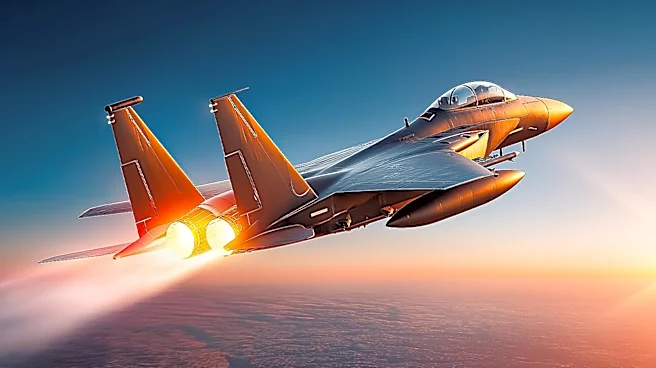








The Lockheed Martin F-22 Raptor, a cornerstone of U.S. air power, has had a complex operational history marked by both strategic importance and significant financial scrutiny. From its initial deployment to the debates surrounding its production numbers and suitability for modern conflicts, the F-22 has been a subject of continuous discussion. Its journey reflects the evolving priorities of military strategy and the challenges of developing and maintaining
cutting-edge defense technology.
Entry into Service and Early Operations
The first U.S. Air Force unit to receive the F-22 was the 43rd Fighter Squadron, based at Tyndall Air Force Base in Florida. This squadron, dedicated to pilot training for the new aircraft, took delivery of 25 Raptors between October 2003 and May 2005. The first operational unit, the 27th Fighter Squadron, began receiving its F-22s in May 2005 and was declared operational by the end of that same year. This marked a pivotal moment for the U.S. Air Force, as the F-22 was touted as a strategic asset crucial for maintaining air superiority, unmatched by any other existing or developing fighter aircraft.
By July 31, 2007, the number of F-22s ordered had been reduced to 183 production aircraft. Of these, 105 had already been assembled at the Lockheed Martin plant in Marietta, and 99 had been delivered to the U.S. Air Force. Despite its advanced capabilities, the F-22 faced criticism for its perceived unsuitability for asymmetric conflicts, such as those in Afghanistan and Iraq, which demanded aircraft adapted for close air support rather than pure air superiority. The U.S. Air Force, however, defended its initial order of 381 F-22s, citing threats from rising powers and the acquisition of modern fighters by various nations.
Production Cuts and Export Restrictions
For the 2008 fiscal year, the U.S. Air Force planned to purchase 20 aircraft. However, in April 2009, then-Secretary of Defense Robert Gates recommended halting production once 187 units were delivered. This decision effectively ended the F-22's production run, as the cost to restart manufacturing was estimated by the U.S. Air Force to be nearly 19 billion dollars, for what would inevitably be a limited production. Adding to the complexity, the Pentagon prohibited the F-22 from being sold for export, despite interest from countries like Japan, Israel, and Australia. This restriction meant that the aircraft's advanced technology would remain exclusively within the U.S. military.
The U.S. Air Force and the manufacturer lobbied to increase the total number of aircraft. The Air Force argued that it would not have enough aircraft to replace the F-15A/B/C interceptors being retired from service. Lockheed Martin, on its part, highlighted the 75,000 jobs linked to the program and the substantial increase in unit price that would result from halting production. Ultimately, the 187th and final production aircraft, bearing the number 4195, left the factory in December 2011 and was delivered to the U.S. Air Force in May 2012. Including the eight prototypes, a total of 195 F-22 aircraft were built.
Legacy and Future Considerations
Following the cessation of production, the U.S. Air Force decided to store the specialized tooling for the production line, comprising 30,000 parts, at the Sierra Army Depot in Lassen County, California. This strategic move aimed to preserve the option for a major service life extension program or significant repairs for battle-damaged aircraft. It also kept open the possibility of restarting the production line, should future geopolitical circumstances demand it. Detailed manuals, including text and videos, were created to explain the use of these tools and manufacturing methods, ensuring that the knowledge base for F-22 production was retained.
In 2006, it was revealed that the F-22 suffered from increased corrosion and structural weaknesses, though these issues never directly endangered flight operations. These problems were attributed to a manufacturing defect at Lockheed Martin and the delivery of substandard parts from Boeing supplier Alcoa. The first 80 production aircraft were primarily affected and required subsequent modifications. The total cost for these measures, along with various software upgrades, amounted to 8.3 billion U.S. dollars. A 2012 Government Accountability Office (GAO) study further highlighted that the F-22 modernization program's costs had more than doubled, from 5.4 billion to 11.7 billion U.S. dollars, underscoring the ongoing financial commitment required to maintain this advanced fleet.