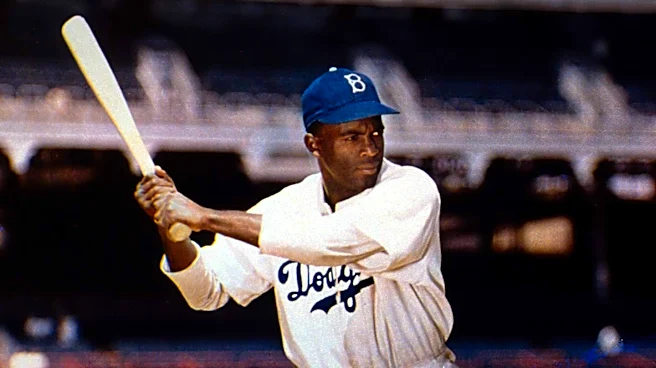









Sandy Koufax, a name synonymous with pitching excellence, didn't start his Major League Baseball career as a dominant force. Born Sanford Braun in Brooklyn, New York, on December 30, 1935, Koufax initially focused on basketball in his youth. It wasn't until a baseball scout recognized his powerful fastball that his path shifted. Signed by his hometown Brooklyn Dodgers at age 19, Koufax debuted in the MLB on June 24, 1955, against the Milwaukee Braves.
His early years, however, were marked by inconsistency, with moderate earned run averages and more losses than wins, leading him to seriously consider ending his career by the end of the 1960 season.
Early Struggles and the Bonus Rule Impact
Koufax's initial six years in the league were largely unremarkable. Despite possessing a fastball that consistently topped 100 mph, he lacked control and a diverse repertoire of pitches beyond his straight, fast ball. His earned run average (ERA) hovered between 4 and 5, and he often found himself with a losing record. This period of inconsistency was partly influenced by the bonus rule under which he signed. This rule mandated that if a major league team signed a player to a contract with a signing bonus exceeding $4,000, they had to keep that player on their 25-man active roster for two full seasons. Consequently, Koufax never played in the minor leagues, missing out on crucial development time that could have honed his skills and control.
His lack of pitching experience and inconsistent performance led manager Walter Alston to distrust Koufax, resulting in sporadic playing time during his first six seasons. This situation, combined with his own ambition, created significant frustration for Koufax. By the end of the 1960 season, he was so disheartened that he contemplated retirement, only to be persuaded to give it "one more year." This decision proved to be a pivotal moment in his career.
A Shift in Professional Attitude and Technique
The turning point for Koufax came with a significant change in his professional attitude and approach to the game. He committed to improving his endurance, running for hours to build stamina. More importantly, he refined his pitching technique. Instead of throwing his fastball with maximum force every time, he learned to hold back slightly, gaining much-needed control over his pitches. This adjustment allowed him to harness his immense talent and transform into an elite pitcher.
This renewed dedication quickly yielded results. In 1961, Koufax recorded 269 strikeouts, breaking a decades-old National League record, and won 18 of his 31 games. The following year, 1962, he threw his first no-hitter and achieved a remarkable monthly ERA of 1.23. While the Dodgers weren't yet contenders for the title, Koufax's individual performance signaled a dramatic shift. He became an All-Star in each of his last six seasons, leading the National League in earned run average for his final five years, in strikeouts four times, and in wins and shutouts three times each. He was the first pitcher in the live-ball era to post an earned run average below 2.00 in three different qualifying seasons and the first in the modern era to record a 300-strikeout season three times.
The Breakthrough Season of 1963
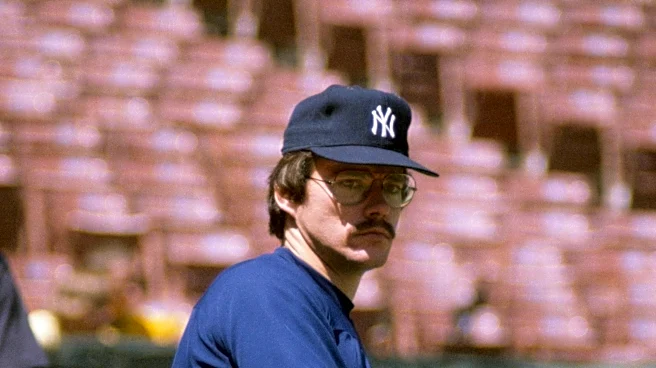
The year 1963 marked Koufax's definitive breakthrough, solidifying his status as one of the league's premier pitchers. He threw his second no-hitter and achieved the pitching Triple Crown, leading the league in wins (25, against only 5 losses), strikeouts (306), and earned run average (1.88). He also recorded eight shutouts, completing games without allowing an opposing run. His dominance extended to the 1963 World Series, where he led the Dodgers to victory over the New York Yankees. In Game 1, he struck out 14 batters, prompting Yankee catcher Yogi Berra to famously remark, "I can see how he won 25 games. What I don't understand is how he lost five." Koufax's exceptional performance earned him the Cy Young Award, the Babe Ruth Award, and the Associated Press Athlete of the Year award, cementing his place in baseball history.