





The inverted row stands out as a highly effective calisthenics exercise designed to build upper body strength, primarily targeting the muscles of the back and arms. This exercise offers a versatile approach to resistance training, allowing for various grip types and hand placements to emphasize different muscle groups. Unlike some other forms of weight training, the inverted row is notably gentle on the joints, making it a preferred option for many
individuals seeking to enhance their physical fitness without undue strain.
Understanding the Mechanics and Muscle Engagement
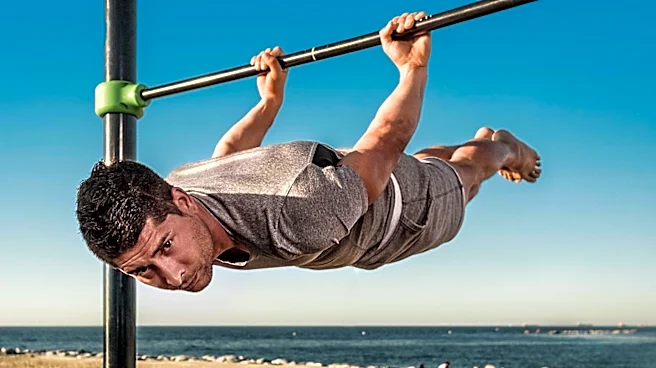
At its core, the inverted row involves pulling one's own body weight upwards while hanging in a supine position, typically from a pull-up bar or similar apparatus. The primary muscles engaged during this movement are the trapezius and latissimus dorsi, which are crucial for developing a strong and well-defined upper back. Beyond these major back muscles, the biceps also play a significant role as a secondary muscle group, assisting in the pulling motion and contributing to overall arm strength. The exercise can be modified by using mixed, underhand, or overhand grips, and by adjusting the width of the hand placement, allowing for a customized training experience that can target specific areas more intensely.
Benefits for Joint Health and Spinal Load
One of the most compelling advantages of the inverted row is its reduced impact on the joints compared to traditional weighted rows. This characteristic makes it an excellent choice for individuals who may experience discomfort or have pre-existing conditions that limit their ability to perform exercises with heavy external loads. The bodyweight nature of the inverted row inherently lessens the stress placed on the joints, promoting a safer and more sustainable training regimen.
Furthermore, research has highlighted the specific benefits of the inverted row for spinal health. A study indicated that this exercise activated the latissimus dorsi muscles, upper back, and hip extensor muscles more effectively than the standing bent-over row. Crucially, it also resulted in less load on the lower spine area. This finding suggests that the inverted row is a preferable exercise for people with lower-back issues, offering a way to strengthen the back and core without exacerbating spinal discomfort. The ability to achieve significant muscle activation with less spinal stress positions the inverted row as a valuable tool in both general fitness and rehabilitative contexts.
Training Protocols and Versatility
Typically, the supine row is performed in three to five sets, with the number of repetitions varying based on the lifter's specific training goals and the type of gains they aim to achieve. This flexibility allows the exercise to be incorporated into various workout programs, from those focused on muscular endurance to those emphasizing hypertrophy or strength. The adaptability of the inverted row, combined with its joint-friendly nature and effective muscle activation, solidifies its place as a fundamental exercise in calisthenics and a beneficial component of a well-rounded strength training routine.