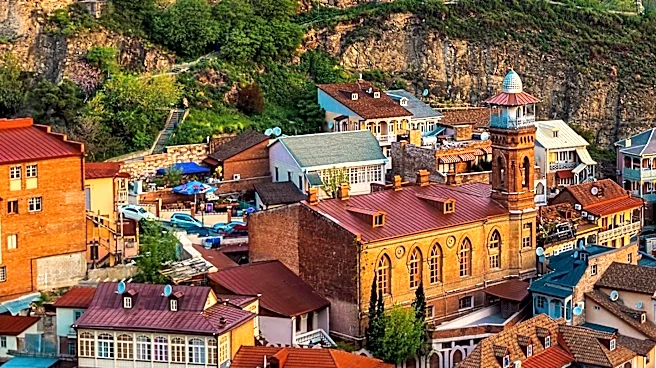







Georgia, a country nestled in the Caucasus region of Eurasia, has experienced a tumultuous yet transformative journey since the early 20th century. Located at the crossroads of Western Asia and Eastern Europe, its history has been significantly shaped by its powerful neighbors. After a brief period of independence following the Russian Revolution of 1917, Georgia was occupied by Soviet Russia in 1921, subsequently becoming the Georgian Soviet Socialist
Republic and an integral part of the Soviet Union. The collapse of the Soviet Union in 1991 marked a new chapter for Georgia, one characterized by the challenges of nation-building and the pursuit of democratic and economic stability.
The Difficult Path to Independence
Upon regaining its independence in 1991, post-communist Georgia faced immediate and profound difficulties. The transition from a Soviet-controlled state to an independent nation was far from smooth. The 1990s were largely defined by widespread civil unrest and a severe economic crisis. This period of instability was a significant hurdle for the newly independent country, as it grappled with internal conflicts and the complex task of establishing a stable political and economic system. The legacy of Soviet occupation and the sudden shift to independence created a challenging environment for governance and societal cohesion.
The Rose Revolution and Subsequent Reforms
The prolonged period of civil unrest and economic hardship that marked most of the 1990s eventually led to a pivotal moment in Georgia's modern history: the Rose Revolution of 2003. This non-violent change of power ushered in a new era for the country. Following the revolution, the new government embarked on a series of significant democratic and economic reforms. These reforms aimed to address the deep-seated issues that had plagued Georgia for over a decade, striving to build a more stable, transparent, and prosperous society. The Rose Revolution is often seen as a turning point, signaling Georgia's commitment to a Western-oriented path of development and integration.
International Engagement and Ongoing Challenges
In its pursuit of stability and integration, Georgia has become an active member of numerous international organizations. These include the Council of Europe, Eurocontrol, the Black Sea Economic Cooperation (BSEC), the Organization for Democracy and Economic Development (GUAM), and the Energy Community. As part of the Association Trio, Georgia has also been recognized as an official candidate for membership in the European Union, underscoring its aspirations for closer ties with European institutions. Despite these advancements and international engagements, Georgia has continued to face political challenges. For instance, since October 2024, the country has been immersed in a deep political crisis, indicating that the path to full stability and democratic consolidation remains an ongoing process.