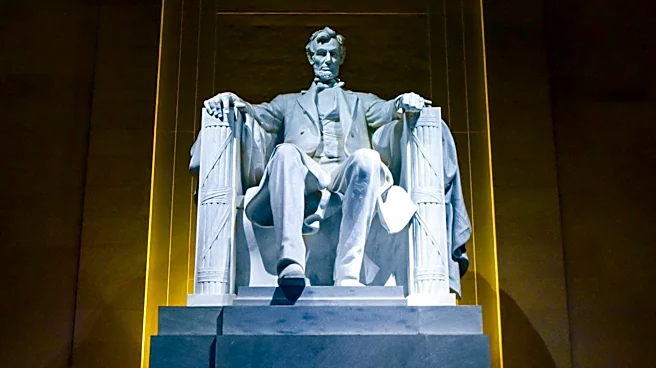

Abraham Lincoln's re-election in 1864 was a remarkable achievement, particularly given the tumultuous backdrop of the American Civil War. As the incumbent president, Lincoln faced not only the immense
pressures of leading a nation through a brutal conflict but also significant political challenges, including factionalism within his own party and intense opposition from the Democrats. His victory marked him as the first president since Andrew Jackson in 1832 to win a second term, a testament to his resilience and the shifting tides of public opinion during a pivotal moment in U.S. history.
The Weight of War and Internal Doubts
By 1864, the Civil War had raged for three years, leading to widespread war-weariness across the Union. This sentiment created a challenging environment for Lincoln's re-election bid. Initially, Lincoln himself harbored doubts about his chances of winning, believing he might lose the election. The fatigue with the war was so profound that some supporters within his own National Union Party even considered the idea of choosing a different candidate for the presidency. This internal questioning highlighted the deep divisions and anxieties that permeated the political landscape, even among those who generally supported the Union cause.
Lincoln's commitment to ending slavery, a central tenet of his platform, also drew fierce criticism. Democratic writers launched vitriolic attacks, blaming him for the war's duration and accusing him of prioritizing the abolition of slavery over a swift end to the conflict. These attacks often included racist caricatures, with Lincoln being called an "ape" and a "widow-maker," illustrating the extreme polarization of the era and the personal nature of the political assaults he endured.
A Shifting Political Landscape and Military Success
Despite the early concerns and intense opposition, several factors contributed to Lincoln's eventual triumph. He successfully navigated the factionalism within the Union Party, maintaining his position as the party's nominee. Crucially, the progress of the war played a decisive role in shaping public sentiment. A significant military victory, the Union Army's success in the Atlanta Campaign, occurred shortly before the election. This win provided a much-needed morale boost and was widely seen as a direct result of Lincoln's leadership.
This military success contrasted sharply with the Democratic Party's internal divisions regarding the war. While their candidate, George B. McClellan, supported the war, other prominent Democrats openly declared the conflict a "failure." This inconsistency within the Democratic platform made McClellan appear to be a weak or indecisive leader in the eyes of many voters, further bolstering Lincoln's image as a strong and effective commander-in-chief.
A Landslide Victory and Historical Significance
On Election Day, Abraham Lincoln secured a decisive victory, winning a landslide in both the popular and electoral votes. He garnered 212 electoral votes, significantly more than McClellan's 21. In the popular vote, Lincoln received 55.02% compared to McClellan's 44.96%. The support for Lincoln was particularly strong among soldiers, with 78% of them casting their ballots for him, alongside 53% of civilians. This overwhelming support is often interpreted by historians as voters rewarding Lincoln for his leadership in guiding the Union towards victory in the war.
Lincoln's re-election was historically significant. He became the first president to win two elections since Andrew Jackson in 1832. Furthermore, he was the first president to be chosen twice by his party since Martin Van Buren, who ran in 1836 and 1840. His victory not only ensured the continuation of his wartime policies but also solidified the path towards the eventual abolition of slavery, fundamentally reshaping the future of the United States.