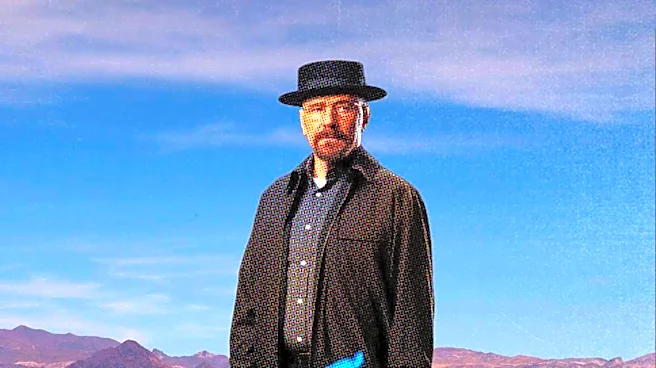







"Felina" stands as the series finale of the American crime drama television series *Breaking Bad*, a pivotal episode that brought the saga of Walter White to its conclusion. Airing on September 29, 2013, in the United States and Canada on AMC, this episode was the sixteenth of the fifth season and the 62nd overall installment of the series. Written and directed by series creator Vince Gilligan, "Felina" was tasked with resolving the complex narrative
threads of White's methamphetamine empire, his family, and his adversaries. Upon its initial broadcast, the episode garnered significant critical acclaim, solidifying its reputation as one of the greatest series finales in television history.
Plotting Walter White's Last Stand
The central plot of "Felina" revolves around Walter White's desperate return to New Mexico. Having evaded a nationwide manhunt, White's primary objective is to ensure the remaining profits from his illicit drug operation reach his family. This involves a meticulously planned scheme to deliver $9.72 million to his son, Walter Jr., through Gretchen and Elliott Schwartz, who are coerced into placing the money in a trust. White's return also serves to tie up loose ends with both his former allies and his enemies, demonstrating a final, calculated effort to exert control over the chaos he created.
His journey back includes several key actions, such as stealing a car and breaking into the Schwartzes' home. He also pays Badger and Pete, who inadvertently provide him with crucial information: blue meth is still being distributed, leading White to deduce that Jesse Pinkman is still alive and likely enslaved. This realization fuels his subsequent actions, including retrieving ricin from his abandoned house and rigging an M60 machine gun in the trunk of his car, connected to a remote unlock button, setting the stage for his final confrontation.
Creative Decisions and Thematic Elements
Series creator Vince Gilligan not only wrote but also directed "Felina," giving him complete creative control over the show's conclusion. During the writing process for the fifth and final season, various uses for Walter White's machine gun were considered. Initial ideas included White using the weapon against police officers or to free Jesse Pinkman from prison or a prison escort. The chosen scenario ultimately involved a more targeted and personal application of the weapon, aligning with White's final objectives.
The episode's title, "Felina," holds a dual significance. It is an anagram of the word "finale," subtly hinting at its role as the series' conclusion. Furthermore, the title is inspired by the character Feleena from Marty Robbins' song "El Paso," a track that is prominently featured throughout the episode. This musical choice adds a layer of thematic depth, connecting White's final journey to the narrative of a man on the run, seeking a final resolution. The episode's impact extended beyond its initial airing, with a sequel film, *El Camino: A Breaking Bad Movie*, released on Netflix on October 11, 2019, further exploring the aftermath of "Felina" for Jesse Pinkman.
Critical Acclaim and Lasting Legacy
"Felina" was met with widespread critical acclaim upon its broadcast, with many critics and viewers hailing it as a masterful conclusion to a groundbreaking series. Its ability to provide a sense of closure while maintaining the show's signature tension and character development contributed to its status as one of television's greatest finales. The episode successfully navigated the complex moral landscape of *Breaking Bad*, delivering a resolution that, while tragic, felt earned and consistent with Walter White's character arc.
The meticulous plotting, strong performances, and Gilligan's direction were frequently highlighted in reviews. The episode's legacy is not only defined by its critical reception but also by its lasting cultural impact. It provided a definitive end to a story that captivated millions, leaving a significant mark on the landscape of prestige television. The subsequent *El Camino* film further cemented the importance of "Felina" as the foundational ending from which new narratives could emerge, demonstrating its enduring influence.