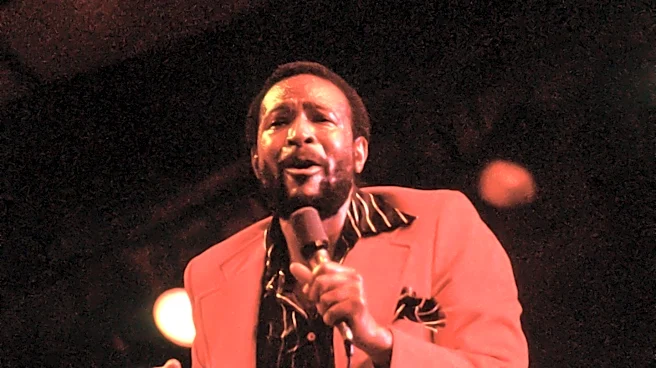





Marvin Gaye's 1982 album, "Midnight Love," marked a significant turning point in his career, not just as his final release during his lifetime, but also as a testament to his resilience amidst personal and professional turmoil. The album's creation was deeply intertwined with his move to Europe, a period where he sought to overcome drug addiction and a strained relationship with Motown, the label he had been with for 21 years. This European chapter,
particularly his time in Ostend, Belgium, proved instrumental in his musical and personal recovery, ultimately leading to the international success of "Midnight Love" and its iconic hit, "Sexual Healing."
Escaping Turmoil and Seeking Solace in Ostend
In January 1981, Gaye's final Motown album, "In Our Lifetime," was released, a move that angered him due to the label's edits, which he likened to an unfinished Picasso painting being completed by others. This frustration solidified his vow never to record for Motown again. The following month, a Belgian concert promoter and long-time fan, Freddy Cousaert, found Gaye in London, visibly shaken and struggling with drug addiction after a European tour. Concerned for Gaye's well-being, Cousaert offered him refuge in his pension in Ostend. Gaye, accompanied by his younger brother Frankie and then-girlfriend Eugenie Vis, accepted the offer, later admitting to Frankie that he left the destination to "the hands of God."
Upon arriving in Ostend on February 14, 1981, Gaye began a period of recovery. He significantly reduced his drug use, started exercising, and attended a local church. This period of healing allowed him to contemplate a musical comeback, fueled by his disappointment with his last two albums and his contentious relationship with Motown. He also aimed to mend his reputation with fans, who had been let down by his often chaotic concert tours. With Cousaert's assistance, Gaye began rehearsing a new band for the "Heavy Love Affair Tour," named after a song from his "In Our Lifetime" album. Rehearsal footage from this period was even featured in the Belgian TV documentary "Transit Ostend." The tour primarily took place in London, Bristol, and Manchester, England, before concluding with two performances in Ostend, where Gaye chose to remain with two of his touring musicians, Gordon Banks and Odell Brown.
Forging a New Path with Columbia Records
As word spread of Gaye's planned musical comeback and his impending departure from Motown, several record labels extended offers. Ultimately, Gaye accepted a three-album contract with CBS Records, specifically Columbia. The financial details of this deal, signed on March 23, 1982, were kept private to avoid interference with his payments to creditors, which had influenced his decision to settle permanently in Europe. It was later revealed that $1.5 million was required to buy out Gaye's Motown contract, with an additional $600,000 advance awarded to the singer.
Even before the deal was finalized, Gaye had begun recording his new album in Brussels in December 1981. He recognized that his previous introspective albums might have alienated some record buyers and fans, and he consciously sought to create more mainstream music to win them back. He expressed his need for a hit, stating, "I'm worried that I'm getting so introspective, no one will listen. I can't afford to miss this time. I need a hit." Regarding the album's musical direction, Gaye described it as a "party record" that people could dance to, but also one where, upon closer listening, his heart would speak, conveying a message of moving past madness and letting love lead the way. He also affirmed his continued belief in Jesus and God's miraculous grace, emphasizing forgiveness.
The Costly Production of a Hit Album
The recording process for "Midnight Love" was extensive, taking over nine months to complete. The album was mixed and edited across various studios in Belgium, Germany, and the United States, particularly in California. Columbia executive Larkin Arnold noted that the production was costly and that Gaye's months in production were sporadic. According to Gaye's lawyer, Curtis Shaw, the recording cost was $1.5 million, though Arnold estimated it to be closer to $2 million. Despite the significant investment and the challenges, the album's eventual success, driven by the hit "Sexual Healing," validated the effort and marked a powerful return for Marvin Gaye.