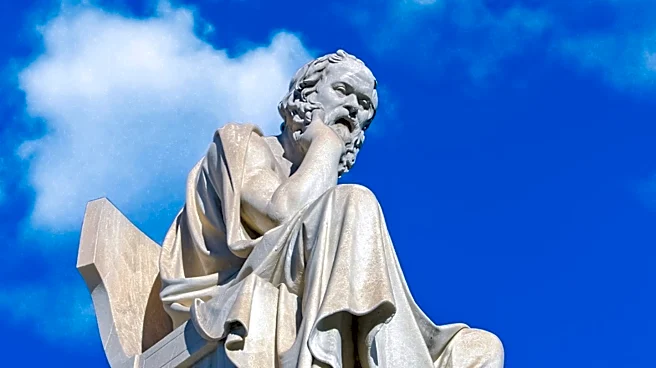










The concept of akrasia, or acting against one's better judgment, has been a subject of philosophical inquiry for centuries. Two of the most influential thinkers in this area are Socrates and Aristotle, each offering distinct perspectives on the nature of akrasia and its implications for human behavior. By examining their views, we can gain a deeper understanding of the complexities surrounding this phenomenon.
Socratic Intellectualism
Socrates, as depicted in Plato's dialogues,
famously argued that genuine akrasia is impossible. According to Socratic intellectualism, human action is necessarily guided by knowledge. Socrates believed that if individuals truly understood what was good, they would naturally pursue it. Therefore, any wrongdoing or failure to act in accordance with one's better judgment must stem from ignorance rather than a lack of willpower.
This perspective suggests that the key to overcoming akrasia lies in acquiring true knowledge. Socrates maintained that individuals do not willingly choose what they believe to be bad; instead, they are misled by false beliefs or incomplete understanding. By seeking wisdom and cultivating a deeper awareness of what is genuinely beneficial, individuals can align their actions with their rational judgments.
Aristotle's Empirical Approach
In contrast to Socrates, Aristotle took a more empirical approach to understanding akrasia. He recognized it as a common human experience and sought to explain it through the interplay of reason and desire. Aristotle distinguished between different mental faculties and their roles in action, suggesting that akrasia results from incorrect beliefs rather than a failure to act according to one's best judgment.
Aristotle's perspective allows for a more nuanced understanding of akrasia. He acknowledged that individuals might possess the knowledge of what is right but still fail to act accordingly due to conflicting desires. This view highlights the complexity of human decision-making and the challenges individuals face in exercising self-control.
Philosophical Implications
The differing views of Socrates and Aristotle on akrasia have significant philosophical implications. Socratic intellectualism emphasizes the importance of knowledge and wisdom in guiding human behavior, suggesting that moral failure is primarily an intellectual issue. In contrast, Aristotle's approach acknowledges the role of desire and emotion, offering a more comprehensive understanding of the factors influencing human actions.
By exploring these perspectives, we can better appreciate the complexities of akrasia and the ongoing struggle to align our actions with our rational judgments. Both Socratic and Aristotelian thought offer valuable insights into the nature of human behavior and the challenges individuals face in pursuing the good. Ultimately, the study of akrasia encourages us to reflect on our own decision-making processes and the ways in which we can cultivate greater self-awareness and self-control.