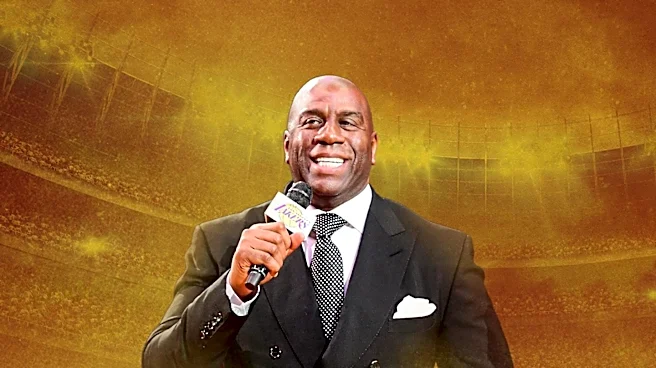

On November 7, 1991, the sports world was rocked by an announcement from basketball superstar Magic Johnson. He publicly disclosed that he had tested positive for HIV, the virus that causes AIDS, and declared
his immediate retirement from professional basketball. This news sent shockwaves through the NBA and beyond, marking a significant turning point in Johnson's life and career, as well as in public perception of HIV. His statement also included reassuring news about his family, confirming that his wife, Cookie, and their unborn child were not infected, and he pledged to dedicate his future to fighting the disease.
The Preceding Events and Discovery
Just weeks before his life-altering announcement, Magic Johnson was still actively competing at the highest level of basketball. In October 1991, he played with the Los Angeles Lakers in the McDonald's Open held in Paris, France. During this tournament, Johnson showcased his enduring talent, leading the Lakers to a gold medal victory and earning the Most Valuable Player (MVP) award for his performance. This period represented the continuation of his illustrious career, with no public indication of the health crisis that was about to unfold.
However, the discovery of his HIV positive status came during a routine physical examination conducted prior to the start of the 1991–92 NBA season. This medical check-up, a standard procedure for professional athletes, revealed the unexpected diagnosis that would fundamentally alter his path. The timing meant that despite his recent success in Paris, his professional playing career was about to come to an abrupt halt.
The Public Announcement and Its Immediate Aftermath
Magic Johnson's press conference on November 7, 1991, was a moment of profound public impact. His decision to openly share his diagnosis was unprecedented for a high-profile athlete at the time, especially concerning a disease that carried significant stigma. In his statement, Johnson was clear about his immediate retirement from the sport he loved, emphasizing the seriousness of his health situation.
Beyond his personal health, Johnson also addressed concerns about his family. He explicitly stated that his wife, Cookie, and their unborn child had tested negative for HIV, providing a crucial piece of information that offered some relief amidst the gravity of his announcement. This detail was important in shaping the public narrative around his diagnosis, highlighting his commitment to his family and their well-being. His declaration to dedicate his life to battling the "deadly disease" signaled a new chapter of advocacy and awareness that would follow his basketball career.
A Shift in Focus: From Court to Cause
Johnson's retirement marked an immediate and dramatic shift in his public role. From being a celebrated athlete known for his on-court magic, he transitioned into a prominent figure in the fight against HIV/AIDS. His announcement brought the disease into mainstream conversations in a way few other events had, challenging existing stereotypes and increasing awareness. His personal commitment to battling the disease became a central part of his identity moving forward.
This period immediately following his announcement was characterized by a profound change in his daily life and public responsibilities. While his playing career was over for the moment, his influence and visibility were redirected towards a critical public health issue. His courage in sharing his diagnosis helped to humanize the disease and sparked important discussions about prevention, treatment, and compassion, laying the groundwork for his future philanthropic and advocacy efforts.