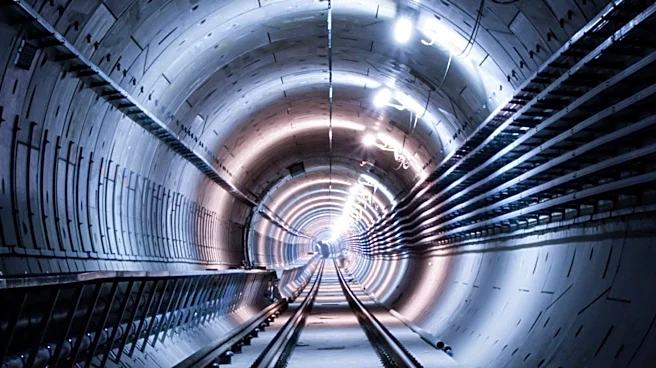





The Transbay Tube stands as a significant feat of engineering, a crucial underwater link that has shaped transportation in the San Francisco Bay Area. Conceived as a solution to growing automobile congestion, its development and construction involved innovative techniques to create a robust and resilient structure. This tube, an integral part of the Bay Area Rapid Transit (BART) system, was designed to withstand the unique challenges of its underwater environment,
including seismic activity, and has served as a vital artery for commuters for decades.
Early Vision and Necessity
The idea for an underwater tube to alleviate traffic on the Bay Bridge emerged as early as 1947. A joint Army-Navy Commission, tasked with assessing the feasibility of the Reber Plan, recommended such a tube. This recommendation highlighted the pressing need for alternative transportation routes to manage the increasing automobile congestion on the then-ten-year-old Bay Bridge. The vision was to create a high-speed rapid rail system that would connect the cities and suburbs across the Bay, a concept that eventually materialized as BART.
This early planning phase recognized the potential for a transit district to construct and operate such a system. Nine Bay Area counties were initially involved in the planning commission, underscoring the regional importance of this ambitious project. The foresight of these early planners laid the groundwork for what would become a cornerstone of the Bay Area's public transportation infrastructure.
Construction and Design Innovations
The construction of the Transbay Tube was an engineering marvel, particularly given its placement in the mud at the bottom of the San Francisco Bay. The tube's design and inherent strength were critical in insulating trains and passengers from the earth's movements, a vital consideration in a seismically active region. This resilience was a testament to the advanced engineering principles applied during its creation.
Immersed tube technology was employed for its construction, a method involving prefabricated segments that are floated to the site, sunk into place, and then linked together. This technique is commonly used for underwater crossings of rivers, estuaries, and sea channels. The segments are built elsewhere, sealed at their ends, and then towed to their final location. Once positioned, additional weight is used to sink them, ensuring precise alignment before they are joined and made watertight. The trench on the bay floor was dredged and graded to fine tolerances to support these elements, and after placement, the trench was backfilled, often with additional protection like rock armor.
Structural Integrity and Seismic Resilience
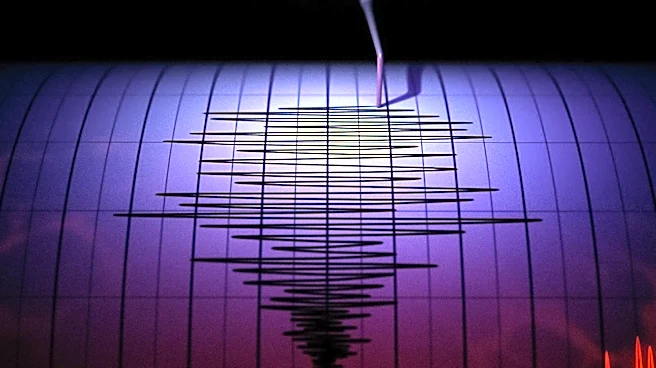
The Transbay Tube was designed with significant seismic considerations in mind. Its construction method, embedding it into the bay's mud, inherently provided a degree of insulation against ground movements. This design proved effective in protecting the train and its occupants from the effects of earthquakes, a crucial feature for any major infrastructure project in California.
Prior to the completion of other significant underwater tunnels globally, the Transbay Tube, finished in 1969, held the distinction of being one of the world's deepest and longest immersed tubes. This status highlights the scale and complexity of the project. The robust design and construction techniques ensured that the tube could withstand the dynamic forces of its environment, providing a safe and reliable passage for millions of commuters over the years. The ongoing performance of the tube, even through various seismic events, underscores the success of its original engineering and construction.
The Immersed Tube Method
The immersed tube method, as utilized for the Transbay Tube, involves creating separate tunnel elements, each of a manageable length. These elements are typically sealed at their ends with bulkheads, allowing them to be floated. Simultaneously, the underwater path for the tunnel is prepared by dredging and grading a trench on the channel bottom to precise specifications. Once an element is towed to its final location, it is assisted to remain buoyant before being weighted down and sunk into place. This critical stage demands accurate alignment of each piece. After an element is in position, the joint between it and the previously placed section is dewatered and sealed, a process that continues sequentially along the tunnel's length. The trench is then backfilled, and protective measures, such as rock armor, are added. This meticulous process ensures the structural integrity and watertightness of the entire underwater tunnel.