







Permanent makeup, a practice known today for creating lasting cosmetic designs on the face, has a rich and varied history that stretches back through numerous cultures and centuries. While modern applications often focus on convenience and aesthetic enhancement, the roots of cosmetic tattooing are deeply intertwined with cultural identity, beauty standards, and even practical considerations across different civilizations. This long tradition highlights
how humans have consistently sought ways to adorn and define themselves through semi-permanent body art.
Ancient Origins and Cultural Significance
Cosmetic tattooing is not a new phenomenon; it has been recognized among many peoples throughout history. For instance, the women of the Ainu, the indigenous people of Japan, traditionally had their lips tattooed dark. Similarly, among the African Fulbe people, it was common for parts of the lips and the surrounding area, or sometimes just the lip edges, to be tattooed. These practices were often deeply embedded in cultural rituals and served as markers of beauty or status within their communities.
The Maori women of New Zealand also incorporated lip tattooing into their elaborate facial designs. Their lips, known as Ngutu purua, were frequently integrated into the ornamental chin tattooing called Ta Moko, as seen in figures like Nanaia Mahuta. In many of these cases, red lips were not considered beautiful, leading to the preference for darker, tattooed lips. A common pigment used in all these instances was charcoal, finely ground into a powder, which was readily available.
Early Medieval European Practices
Evidence suggests that cosmetic tattooing was also present in early medieval Europe. The Jewish-Arab traveler Ibrahim ibn Yaqub, after visiting Schleswig, mentioned an "artificially produced eye makeup" among the Vikings. While one translation suggested this makeup enhanced beauty, another, more widely accepted interpretation, indicates that it was a lasting form of eye makeup that did not disappear like ordinary kohl, which required constant reapplication. This latter translation is supported by the easy availability of charcoal pigment and tattooing instruments, such as needles made from plant thorns or fishbones, as well as the global prevalence of tattooing.
This suggests that tattooed eyeliner was common among both women and men in Central and Northern Europe during the early medieval period. The desire for long-lasting cosmetic effects, whether for beauty or practical reasons, appears to be a consistent thread throughout human history, connecting diverse cultures across vast geographical and temporal distances.
The Dawn of Modern Cosmetic Tattooing
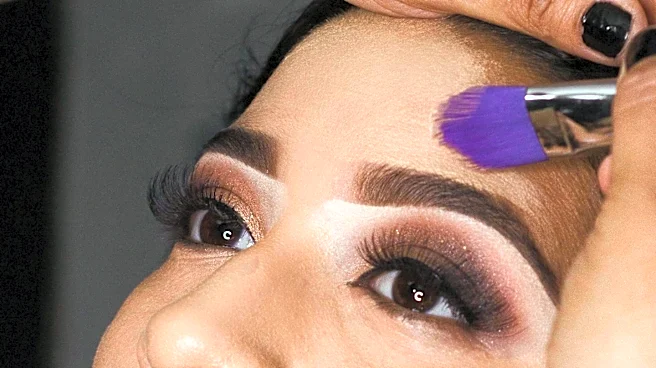
In more recent times, the scientific documentation of cosmetic tattooing began in 1951 with the tattoo artist Horst Streckenbach. Streckenbach was known for tattooing beauty marks, eyeliners, eyebrows, and even eyeshadow. His work marked a significant step towards the modern understanding and application of permanent makeup. His techniques laid some of the groundwork for the specialized cosmetic tattooing we see today.
Beyond purely cosmetic applications, Streckenbach also ventured into the medical field starting in 1976. He performed the world's first nipple reconstruction following a mastectomy operation. This procedure was so groundbreaking that it was adopted into medical literature as the "Streckenbach technique." This highlights the evolution of tattooing from purely aesthetic or cultural practices to include reconstructive and paramedical applications, demonstrating the versatility and potential impact of these techniques on individuals' lives. Another form of permanent makeup, manual microblading, represents an Asian technique that has gained popularity more recently, further diversifying the methods available for cosmetic enhancement.