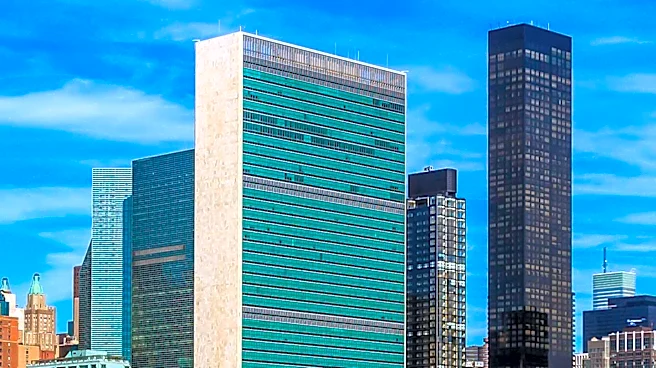


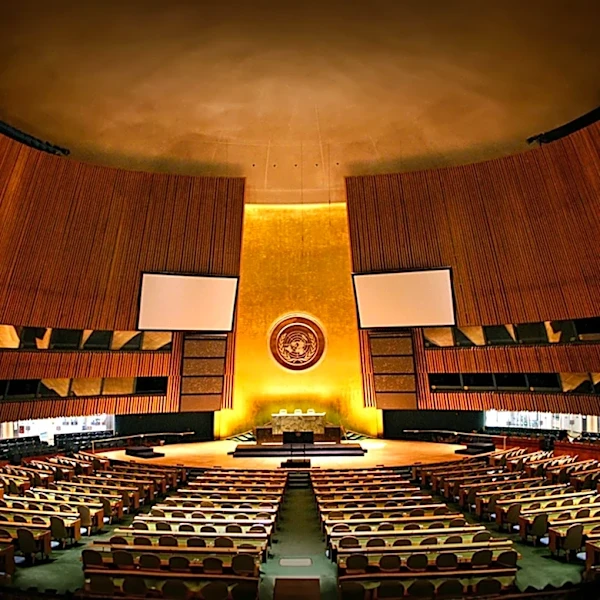


The headquarters of the United Nations, a distinctive complex completed in 1952, serves as the official base for the international organization. Located in the Turtle Bay neighborhood of Midtown Manhattan in New York City, this sprawling site spans 17 to 18 acres and overlooks the East River. Its strategic placement and unique legal status make it a pivotal center for global diplomacy and cooperation, embodying the UN's mission within a bustling urban
environment.
Architectural Ensemble and Key Structures
The UN headquarters complex is an architectural marvel, comprising several significant structures that facilitate the organization's diverse functions. Among these are the Secretariat, Conference, and General Assembly buildings, each designed with a specific purpose in mind. The Dag Hammarskjöld Library also forms an integral part of this complex, providing essential resources for the UN's work. The overall design was overseen by a board of architects led by Wallace Harrison, with final projects developed by notable figures such as Oscar Niemeyer and Le Corbusier, contributing to its modern architectural style.
These buildings house the seats of the principal organs of the UN, including the General Assembly and the Security Council. However, it is important to note that the International Court of Justice, another principal organ, is uniquely seated in The Hague, not in New York. The complex's design and functionality reflect the intricate operations of a global body, providing dedicated spaces for deliberation, administration, and information dissemination.
Extraterritorial Status and Local Relations
One of the most distinctive aspects of the UN headquarters is its extraterritorial status. Although physically located within the United States, the land and the spaces of rented buildings are under the sole administration of the United Nations. This unique arrangement is established through a treaty agreement with the U.S. government, effectively making the headquarters an international zone within New York City.
Despite this extraterritoriality, the United Nations maintains a cooperative relationship with its host country. In exchange for essential services such as local police and fire protection, as well as other municipal services, the UN agrees to acknowledge most local, state, and federal laws. This balance ensures that while the UN operates with a degree of independence, it also integrates responsibly within the broader legal and social framework of its New York City location. This status also means that the headquarters buildings are not subject to local designations like New York City designated landmarks, as such designations fall under the purview of the New York City Landmarks Preservation Commission.
Global Presence Beyond New York
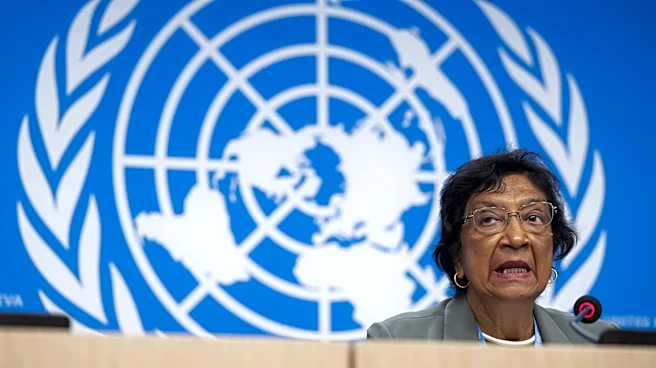
While the New York City complex serves as the primary headquarters, the United Nations also maintains three additional subsidiary regional headquarters or headquarters districts around the world. These include offices in Geneva, Switzerland, established in 1946; Vienna, Austria, opened in 1980; and Nairobi, Kenya, which began operations in 1996. These adjunct offices play a crucial role in representing UN interests and facilitating diplomatic activities in their respective regions.
These regional headquarters also enjoy certain extraterritorial privileges, similar to the main complex in New York. However, they do not house the seats of the major UN organs. Instead, they support the broader mission of the United Nations by extending its reach and operational capacity globally. It is also worth noting that none of the UN's 15 specialized agencies, such as UNESCO, are located at the main headquarters, though some autonomous subsidiary organs like UNICEF are based there.