








The 1980s represented a period of significant upheaval and eventual substantial growth for the Dow Jones Industrial Average (DJIA). Despite experiencing some of its most dramatic single-day percentage drops, the index ultimately saw a remarkable increase over the decade. This era was marked by economic shifts, including an early 1980s recession, and major market events that tested investor confidence but ultimately showcased the market's resilience
and capacity for recovery.
Early Challenges and a Significant Milestone
The decade began with economic headwinds, as the early 1980s recession impacted the market. In early 1981, the Dow attempted to break above the 1,000-point mark multiple times, signaling a potential recovery, but it consistently retreated. This period of hesitation reflected the broader economic uncertainty of the time. However, by January 1987, the Dow achieved a significant milestone, closing above 2,000 for the first time in its history. This achievement marked a moment of optimism and indicated a strong upward trend in the market.
This initial surge above 2,000 points was a testament to the underlying strength building in the market, even as various global and economic factors were at play. The index's ability to reach this new high suggested a growing confidence among investors, setting the stage for what would become a decade of considerable, albeit volatile, expansion. The early part of the decade, despite its challenges, laid the groundwork for this eventual breakthrough.
Black Monday and the Friday the 13th Mini-Crash
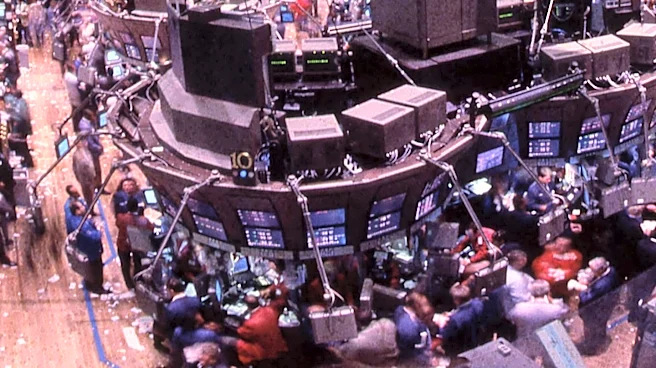
Just months after reaching its 2,000-point milestone, the Dow experienced one of its most infamous days: Black Monday. On October 19, 1987, the index suffered its largest one-day percentage drop in history, plummeting by 22.61%. This sudden and severe crash sent shockwaves through financial markets worldwide, with no clear reasons immediately identified to explain the dramatic decline. The event highlighted the inherent risks and unpredictable nature of stock market movements.
Two days after Black Monday, the market showed signs of recovery, rising 10.15% above the 2,000 level, indicating a mild attempt at rebound. However, volatility continued to characterize the decade. On October 13, 1989, the market faced another significant downturn, known as the Friday the 13th mini-crash. This event resulted in a loss of almost 7% of the index in a single day and was linked to the collapse of the junk bond market. These two major crashes underscored the turbulent nature of the 1980s financial landscape.
Overall Growth Amidst Adversity
Despite the dramatic crashes and other economic challenges, the 1980s proved to be a period of substantial overall growth for the Dow Jones Industrial Average. The index began the decade at 838.74 and concluded it at 2,753.20, representing an impressive increase of 228%. This significant rise occurred even in the face of events like Silver Thursday, the early 1980s recession, the 1980s oil glut, and the Japanese asset price bubble, along with various political distractions.
The resilience of the Dow during this period is notable. The index recorded only two negative years throughout the entire decade, specifically in 1981 and 1984. This demonstrates that while individual events could cause sharp declines, the overarching trend for the 1980s was one of strong upward momentum. The decade ultimately showcased the market's capacity to absorb significant shocks and still deliver considerable returns over the long term.