



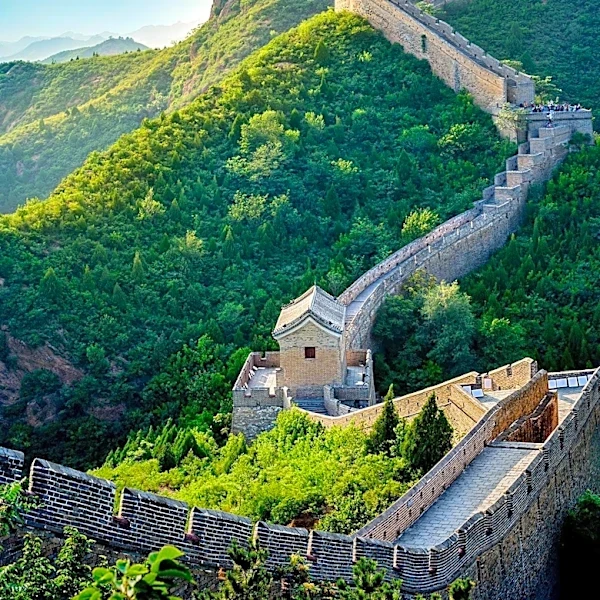





The Great Wall of China stands as a monumental testament to ancient engineering and strategic defense. This series of fortifications, built across the historical northern borders of ancient Chinese states and Imperial China, served as a crucial barrier against various nomadic groups from the Eurasian Steppe. Its construction spans centuries, with the earliest walls dating back to the 7th century BC, eventually joined together during the Qin dynasty.
Successive dynasties continued to expand and refine this vast system, with the most renowned sections being those constructed by the Ming dynasty between 1368 and 1644.
Evolution of Construction Materials
Early iterations of the Great Wall primarily utilized readily available natural resources such as rammed earth, stones, and wood. These materials were effective for their time, forming substantial barriers against invaders. However, as construction techniques advanced and the scale of the project grew, so did the sophistication of the materials employed. During the Ming dynasty, a significant shift occurred with the widespread adoption of bricks. Bricks offered several advantages over earlier methods; their uniform size and manageable weight made them easier to work with, which in turn accelerated the construction process. Furthermore, bricks possessed superior load-bearing capacity and durability compared to rammed earth, contributing to a more robust and long-lasting structure.
While bricks became a staple, stone remained an essential component, particularly for critical structural elements. Stone, inherently stronger under its own weight than brick, was more challenging to quarry and shape. Consequently, rectangular cut stones were strategically used for the wall's foundations, the inner and outer brims, and the construction of gateways. Other materials like tiles and lime were also incorporated, demonstrating a comprehensive approach to building that leveraged the strengths of various resources. A notable innovation was the use of sticky rice mortar, a mixture of sticky rice soup and slaked lime, which proved to be an exceptionally strong binding agent for the bricks. Contrary to popular urban legends, no human bones or body parts were ever incorporated into this mortar or any part of the wall.
Defensive Features and Communication Systems
The design of the Great Wall was not merely about creating a physical barrier; it incorporated numerous defensive features aimed at maximizing its protective capabilities. The uppermost portion of the vast majority of the wall was lined with battlements. These battlements featured defensive gaps, typically a little over 12 inches tall and about 9.1 inches wide, which allowed guards to survey the surrounding landscape and engage potential threats from a protected position. The strategic placement of these features provided a clear advantage to the defenders.
Beyond the physical defenses, effective communication was paramount for the army units stationed along the extensive length of the Great Wall. To facilitate rapid communication, signal towers were strategically erected on hilltops or other elevated points, ensuring maximum visibility. These towers played a crucial role in calling for reinforcements and warning garrisons about enemy movements, enabling a coordinated response across vast distances. In addition to these towers, the wall incorporated other tactical elements, such as wooden gates that could be used as traps against advancing enemies. To support the troops, essential infrastructure like barracks, stables, and armories were constructed near the wall's inner surface, providing necessary facilities for the soldiers and their equipment.
The Ming Dynasty's Enduring Contribution
The Ming dynasty's contribution to the Great Wall is particularly significant, as they built the most famous and well-preserved sections. Their extensive use of bricks, along with sophisticated construction techniques, resulted in a more formidable and enduring structure. The Ming-era wall sections are characterized by their robust construction and integrated defensive systems, including the iconic watchtowers and battlements that are widely recognized today. This period marked a peak in the wall's development, transforming it into the architectural marvel we largely associate with the Great Wall of China. The strategic importance of these fortifications during the Ming era underscored the dynasty's commitment to protecting its northern borders from external threats, leaving behind a legacy that continues to captivate and inspire awe.