
Meditative postures are not merely symbolic; they are carefully designed body positions intended to facilitate deep concentration and mental clarity. While traditions have long emphasized the importance
of a stable and upright spine, modern research is beginning to shed light on the physiological mechanisms behind these practices. The goal is to create a physical foundation that supports sustained attention, allowing the meditator to focus on internal experiences, such as the breath, without distraction from bodily discomfort or instability.
The Role of Stability in Meditation
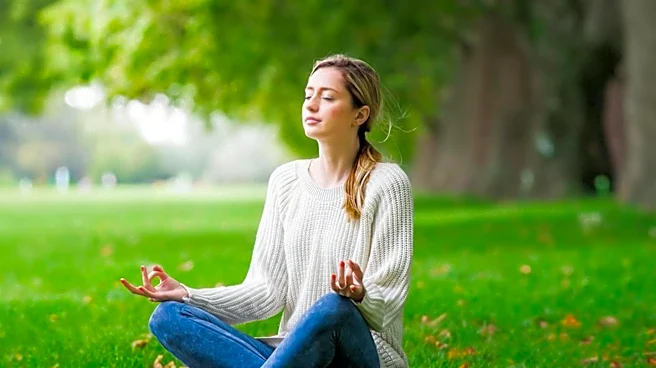
Sitting positions, particularly cross-legged ones, have been utilized for centuries in Buddhist and Hindu traditions due to the stable base they provide. This stability is crucial because it allows the practitioner to maintain an erect and balanced spinal column. When the spine is properly aligned, the muscles of the back can relax, reducing physical strain. This relaxation, in turn, frees the attention to be directed inward, typically towards the breath, rather than being consumed by bodily discomfort or the effort to maintain posture. The Yoga Sutras themselves emphasize the need for a posture that is both stable and comfortable, highlighting that the physical setup directly influences the quality of meditation.
For instance, strenuous postures would be impractical for extended meditation, while overly relaxed positions might lead to sleep. The cross-legged postures are considered ideal because they are simple, stable, and restful for the muscles, yet active enough to keep the practitioner awake and alert. This balance between rest and alertness is key to fostering a meditative state. The traditional zafu cushion, for example, is designed to elevate the hips above the knees, which helps practitioners with stiff hips achieve a straight and upright spine, thereby enhancing stability and comfort.
Scientific Insights into Postural Stability
A 2018 pilot study provided scientific comparison of the physical stability offered by different meditation seats: a zafu cushion, a chair, and a kneeling meditation bench. The findings revealed that the only statistically significant difference among these options was in side-to-side sway, where the zafu provided the most stability. This result aligns with the "oriental tradition" and existing research on Zen sitting postures, suggesting that the design of the zafu is particularly effective in minimizing lateral movement during meditation.
For other measures, such as front-to-back sway and small, rapid postural tremors, the study found no significant differences among the three types of seats. This indicates that while the zafu excels in lateral stability, chairs and meditation benches can also offer comparable stability in other dimensions. The principles derived from using a zafu to maintain a fixed posture have even found applications in other fields, such as designing chairs for microscopic surgery and improving children's classroom posture, underscoring the practical effectiveness of these design principles. However, the study also highlighted that comfort is a crucial practical consideration for beginners, noting that some participants experienced ankle pain when using the meditation bench. The researchers suggested that beginners might start with chairs or benches, with a transition to the zafu recommended for medium-term practice, acknowledging its superior stability for sustained focus.