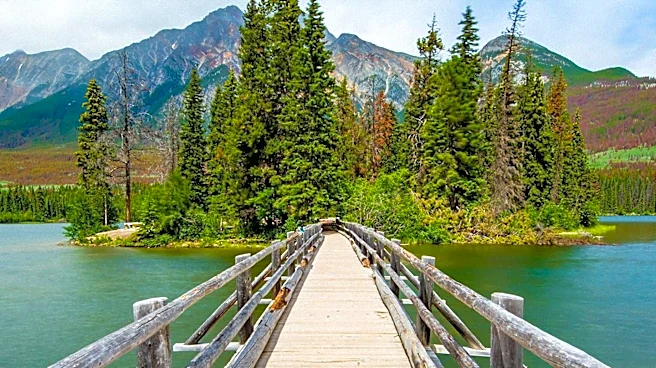






Jasper National Park, while celebrated today for its breathtaking natural beauty and ecological diversity, also holds a rich historical narrative that dates back centuries. Its origins as a protected area and its connection to early trade and exploration in the Canadian Rockies provide a fascinating glimpse into the region's past. From its initial establishment as a forest reserve to its eventual recognition as a UNESCO World Heritage site, the park's
history is deeply intertwined with the development of Western Canada and the broader story of North American exploration.
The formal protection of the area began in 1907 when a vast forest reserve, spanning 13,000 square kilometers, was established. This marked a significant step towards preserving the natural resources and landscapes of the region. Over two decades later, in 1930, this protected area was elevated to the status of a national park, solidifying its role in Canada's burgeoning conservation movement. This transition from a forest reserve to a national park reflected a growing understanding of the need for comprehensive environmental protection and the recognition of the area's unique value beyond just its timber resources.
Beyond its official designations, the park's history is also shaped by the human activities that predated its establishment. Historically interesting sites within the park continue to attract numerous visitors annually, offering tangible links to the past. Among these are the Athabasca Pass and Yellowhead Pass, which served as crucial trade routes during the era of the fur trade. These passes were vital arteries for the movement of goods and people, connecting different regions and playing a significant role in the economic and social development of the Canadian West. They represent the enduring legacy of early indigenous peoples and European traders who navigated these challenging mountain landscapes.
Another key historical landmark within the park is the remnants of Jasper House, a fur trading post established in 1829. This post was named after Jasper Hawes, who represented the North West Company at the trading station starting in 1817. The presence of Jasper House underscores the importance of the fur trade in shaping the region's early history and its connection to major trading companies. These historical sites not only provide insights into the lives of early traders and explorers but also serve as a reminder of the complex interactions between humans and the natural environment over time.
The park's eventual designation as a UNESCO World Heritage site in 1984, alongside other protected areas in the Canadian Rockies, further cemented its historical and cultural significance. This recognition was not solely based on its natural features but also implicitly acknowledged the long history of human interaction with this landscape. The preservation of these historical trade routes and the remnants of early settlements within the park ensures that future generations can learn from and appreciate the rich tapestry of human history woven into the fabric of Jasper National Park.