


William Hallissey Sullivan Jr., born in 1915, left a significant mark on American professional football, primarily through his ownership of the Boston Patriots franchise. His journey began with a vision for a football team in Boston, a vision that initially faced rejection from the established National Football League. Undeterred, Sullivan became a pivotal figure in the formation of the American Football League, securing the eighth and final team for its
inaugural season in 1960. His dedication to the sport and his franchise would span nearly three decades, shaping a significant era in football history.
Founding the Boston Patriots and Early AFL Years
In 1959, Billy Sullivan sought an NFL franchise for Boston, but his request was denied, partly due to the failure or relocation of five previous NFL attempts in the city. This setback did not deter him. Instead, Sullivan turned his attention to the nascent American Football League, where he successfully led a syndicate to acquire the league's eighth and final team. This team, the Boston Patriots, joined the AFL for its inaugural season in 1960, with Sullivan paying a franchise fee of $25,000. He immediately involved his family in the team's operations, naming his son Patrick as general manager and his other son, Chuck, as executive vice president.
Sullivan's influence extended beyond just his team. In 1964, he played a crucial role in helping the AFL negotiate a substantial 5-year, $30 million television agreement with NBC. This deal was vital for the league's financial stability and growth, demonstrating Sullivan's business acumen and his commitment to the success of the AFL as a whole. His efforts helped solidify the league's position and paved the way for its future integration with the NFL.
The AFL-NFL Merger and Team Evolution
One of Sullivan's most significant contributions to professional football was his involvement in the AFL–NFL merger. In 1966, he successfully requested an antitrust exemption from the United States Congress, a critical step that allowed the two rival leagues to combine without legal impediments. This merger fundamentally reshaped the landscape of American football, creating the unified league known today.
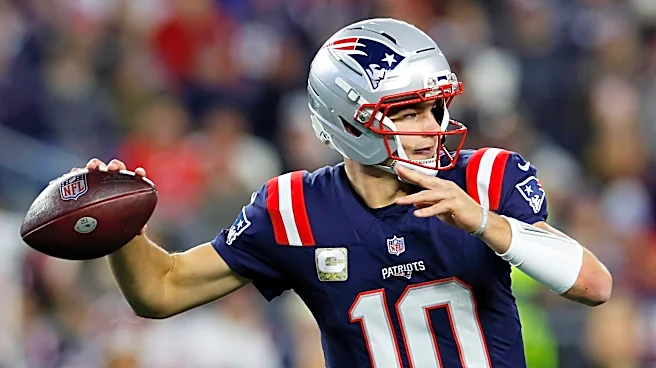
Under Sullivan's ownership, the Patriots experienced various changes and milestones. In March 1971, the team's name was officially changed from the Boston Patriots to the New England Patriots. This rebranding coincided with the team's move to Schaefer Stadium in Foxborough, Massachusetts, and was intended to embrace the entire New England region. This decision followed a previous proposal in February to rename the team the "Bay State Patriots," which was ultimately rejected.
Challenges, Successes, and the Sale of the Franchise
Despite his foundational role, Sullivan faced internal challenges within the Patriots organization. In 1974, he was ousted as president of the team, even though he owned more than 20% of the voting stock. However, by the end of 1975, the Sullivan family managed to regain control by buying out the minority partners. This move was driven by necessity, as it was the only way he could repay the $5.3 million in loans he had taken out to acquire his partners' shares. To achieve this, Sullivan needed to buy out non-voting public shareholders. He structured a deal offering these shareholders $15 per share, and the transaction was approved by the shareholder class. Prior to the shareholder vote, Sullivan successfully lobbied for a bill in the Massachusetts legislature that reduced the required vote for companies to buy back non-voting public shares from two-thirds to a simple majority.
During his 28 seasons as owner, the Patriots achieved 14 winning records, made six playoff appearances, played in the 1963 AFL Championship Game, and represented the AFC in Super Bowl XX. However, financial difficulties, particularly after heavy losses tied to financing The Jacksons' 1984 Victory Tour, which used Sullivan Stadium as collateral, ultimately forced him to sell the team. The mounting debt led to the sale of both the Patriots and the stadium in 1988 to Victor Kiam. Sullivan later filed a $116 million antitrust lawsuit against the NFL in 1991, settling for $11.5 million in 1996. He passed away in 1998 after an eight-year battle with prostate cancer.