


After achieving significant success and an MVP award with the Oakland Athletics, Jose Canseco's career took a turn marked by trades, new teams, and persistent injury challenges. His time with the Athletics, particularly the "Bash Brothers" era, established him as a premier power hitter. However, as the 1990s progressed, Canseco's journey through Major League Baseball became a testament to both his enduring talent and the physical toll the sport can take.
His transitions to teams like the Texas Rangers, Boston Red Sox, and a return to the Oakland Athletics, among others, illustrate a period of fluctuating performance often interrupted by stints on the disabled list.
Canseco was traded from the Athletics to the Texas Rangers on August 31, 1992. His tenure with the Rangers included a controversial 1993 season. During this year, he was involved in a notable play where, as a right fielder, he lost a fly ball hit by Carlos Martinez near the fence, which then struck him on the head and went over for a home run. Later that season, on May 29, 1993, Canseco made a relief pitching appearance against the Boston Red Sox, an unusual event for a position player. This outing resulted in an arm injury, requiring surgery in late June and effectively ending his season. These incidents highlighted a period where his career began to be defined by more than just his offensive prowess.
Battling Injuries with the Boston Red Sox
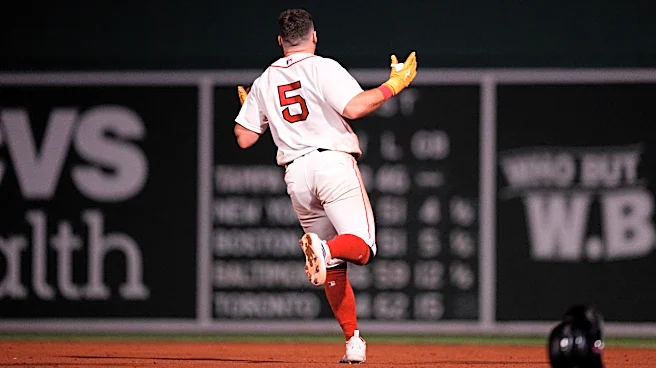
In December 1994, Canseco was traded to the Boston Red Sox, joining a team that included Roger Clemens and Mo Vaughn. His two-year stint with the Red Sox was heavily impacted by injuries. In 1995, he missed 50 games in the first half of the season. Despite these setbacks, he showed flashes of his former brilliance, batting .387 with 21 home runs and 66 RBIs in 79 games from July 1 until the end of the season. He also recorded his longest hitting streak, hitting safely in 17 consecutive games from August 27 to September 15. He finished 1995 with 24 home runs and a .306 batting average, his highest since 1988, and hit his 300th career home run. The Red Sox won the AL East, but were swept by the Cleveland Indians in the ALDS.
The 1996 season with the Red Sox followed a similar pattern. Canseco had a strong first half, hitting 26 home runs by the All-Star break, placing him fourth in the AL. Between May 18 and June 29, he posted a .306 batting average with 19 home runs and 44 RBIs in just 39 games. However, another injury sidelined him on July 25, causing him to miss nearly 50 games. He returned in September but hit only two more home runs. He finished the year with a .289/.400/.589 slash line, 28 home runs, 82 RBIs, and 22 doubles in 96 games. Over his two years in Boston, Canseco missed over 120 games, playing in only 102 and 96 games respectively, averaging 43 home runs and 134 RBIs per 162 games played when healthy.
A Brief Return to Oakland and Career Decline
In January 1997, Canseco was traded back to the Oakland Athletics. His return generated excitement, particularly for a "Bash Brothers" reunion with Mark McGwire. He had a promising first half, playing in 83 of 89 games, with more than half in the outfield, and accumulating 18 home runs and 57 RBIs by the All-Star break. However, a back injury again placed him on the disabled list, causing him to miss 15 games. His season ended on August 26, as the Athletics, focusing on young talent and having traded McGwire, reportedly shut him down to avoid triggering a contract renewal. He finished 1997 with a career-low .235 average, but still hit 23 home runs and 74 RBIs in 388 at-bats. By the end of 1997, Canseco ranked among the Athletics' franchise leaders in home runs, RBIs, slugging percentage, OPS, and strikeouts, but his career was increasingly defined by his struggle to stay on the field.