






Abraham Lincoln's Gettysburg Address, delivered on November 19, 1863, stands as one of the most famous and historically significant speeches in American history. Despite its brevity, comprising only 271 words across ten sentences, its impact has been profound and enduring. However, modern scholars face a unique challenge when studying this iconic speech: the precise wording of Lincoln's address is not definitively settled. This is due to variations
found in contemporary newspaper transcriptions and several handwritten copies Lincoln himself produced, each differing slightly in wording, punctuation, and structure.
The Challenge of Textual Authenticity
The discrepancies among the various versions of the Gettysburg Address highlight a fascinating aspect of its historical transmission. While the speech is universally recognized, the exact phrasing Lincoln uttered on that day in 1863 remains a subject of scholarly discussion. These differences are not merely academic curiosities; they reflect the dynamic nature of how important historical documents were recorded and disseminated in the 19th century. The existence of multiple versions underscores the importance of careful textual analysis when engaging with such foundational American texts.
One of the most well-known versions, and often considered the standard text, is the Bliss copy. This particular manuscript was written by Lincoln after the speech as a favor for Colonel Alexander Bliss, and it holds the distinction of being the only version Lincoln signed. Its prominence means that most modern copies of the speech are derived from it. However, even the Bliss copy differs from other versions Lincoln prepared both before and after his delivery, illustrating the fluid nature of the text even in the author's own hand.
The Five Manuscripts and Their Significance
Beyond the Bliss copy, four other significant manuscripts of the Gettysburg Address exist, each offering a slightly different glimpse into Lincoln's words. These include the Nicolay copy, the Hay copy, the Everett copy, and the Bancroft copy. Each of these versions contributes to the complex tapestry of the speech's textual history. The Nicolay and Hay copies, for instance, are believed to be earlier drafts or transcriptions, while the Everett and Bancroft copies were also prepared by Lincoln for specific individuals after the event.
The variations among these manuscripts, though sometimes subtle, can affect the rhythm and emphasis of certain phrases. For example, one reading might replace "far so" with "so far" in the line "...thus far so nobly advanced," as noted in a 2006 reading compared to the Bliss copy. Such minor alterations, when viewed collectively, demonstrate that the Gettysburg Address was not a static document but one that evolved even in Lincoln's own revisions. The fact that the Bliss copy is the last known version Lincoln wrote and the only one he signed gives it a particular authority, making it the primary source for most contemporary reproductions of the speech.
The Enduring Legacy of a Brief Address
Despite the textual variations, the core message and profound impact of the Gettysburg Address remain undisputed. Its 271 words, delivered in approximately two minutes, followed a much longer speech by Edward Everett, which was also well-received. Lincoln's ability to distill the immense sacrifice of the Civil War and the foundational principles of the nation into such concise and powerful language is a testament to his rhetorical genius. The speech's enduring power lies in its articulation of the ideals of liberty and equality, and its call for a "new birth of freedom" and a government "of the people, by the people, for the people."
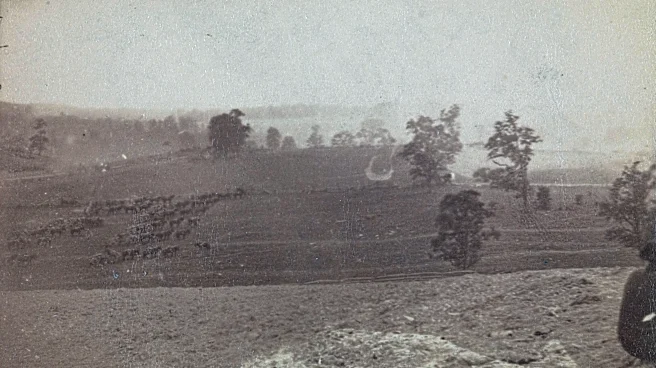
The historical context of the speech, delivered at the dedication of the Soldiers' National Cemetery just four and a half months after the deadliest battle of the Civil War, further amplifies its significance. It served not only as a eulogy for the fallen but also as a redefinition of the war's purpose, shifting focus from merely preserving the Union to ensuring that the nation founded on the principle that all men are created equal would long endure. The careful crafting of these words, even with their slight variations across manuscripts, ensured their place as a cornerstone of American political thought and rhetoric.