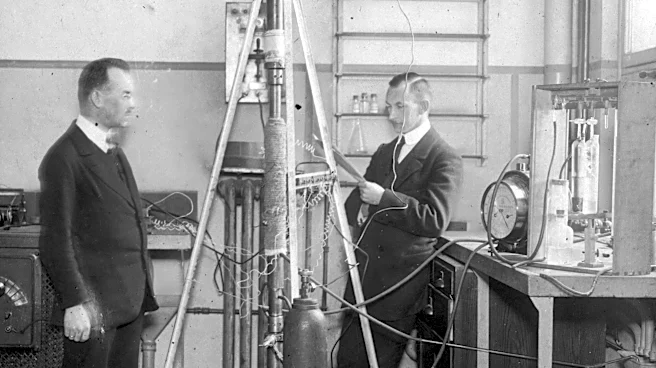








Structuralism in psychology, also known as structural psychology, emerged as a theory of consciousness primarily developed by Edward Bradford Titchener in the late 19th and early 20th centuries. This school of thought aimed to dissect the adult mind, viewing it as the sum total of an individual's experiences from birth to the present. Structuralists sought to identify the simplest, most definable components of experience and then understand how these
components combined to form more complex experiences, as well as how they correlated with physical events.
To achieve this, structuralists heavily relied on introspection, a method involving self-reports of sensations, views, feelings, and emotions. Titchener, a student of Wilhelm Wundt, was significantly influenced by Wundt's theories of voluntarism, association, and apperception. Titchener's goal was to classify the structures of the mind in a manner similar to how chemists categorize natural elements, believing that only observable events constituted science.
Titchener's Approach to Mind and Consciousness
Titchener believed that the mind represented the accumulated experience of a lifetime. He theorized that by defining and categorizing the basic components of the mind and the rules governing their interaction, he could understand reasoning and the mind's overall structure. His primary tool for this endeavor was introspection. He asserted that the state of consciousness, which is the subject matter of psychology, could only become an object of immediate knowledge through introspection or self-awareness.
Titchener established strict guidelines for introspective analysis. For example, a subject presented with an object, such as a pencil, would be instructed to report its characteristics like color and length, but not to name the object itself. Naming the object was considered a "stimulus error" because it did not describe the raw data of the subject's immediate experience. Titchener concluded that conscious experience was composed of three types of mental elements: sensations (elements of perceptions), images (elements of ideas), and affections (elements of emotions). These elements, he believed, could be broken down into properties such as quality, intensity, duration, clearness, and extensity, with sensations and images possessing all these qualities, while affections lacked clearness and extensity.
Criticisms and Alternative Theories
Structuralism faced substantial criticism, particularly from functionalism, a school of psychology that later evolved into the psychology of pragmatism. The main critique centered on structuralism's reliance on introspection. Critics argued that self-analysis was not feasible because introspective individuals could not fully grasp the processes or mechanisms of their own mental operations. This led to inconsistent results, as introspection yielded different outcomes depending on the individual and their focus. Some also pointed out that introspective techniques often resulted in retrospection—the memory of a sensation rather than the sensation itself.
Behaviorists, especially methodological behaviorists, completely rejected the idea of conscious experience as a valid topic for psychological study, insisting that scientific psychology should only focus on objectively measurable phenomena. The Gestalt school of psychology also challenged structuralism, arguing that the mind could not be broken down into individual elements, emphasizing instead that the whole of experience is greater than the sum of its parts. Furthermore, structuralism was criticized for neglecting important developments outside its scope, such as animal behavior and personality studies. Titchener himself was criticized for prioritizing pure knowledge over practical problem-solving.
Functionalism as a Counterpoint
Functionalism, developed by William James, emerged as a direct alternative to structuralism. While Titchener took offense to this new theory, functionalism stressed the importance of empirical, rational thought over an experimental, trial-and-error philosophy. James's approach incorporated introspection but also included analysis, experimentation (such as in hypnosis or neurology), and comparison (using statistical methods to distinguish norms from anomalies). Functionalism differed significantly by focusing on the utility of mental processes in adapting to the environment, rather than merely dissecting the processes themselves. This shift in focus marked a significant divergence from structuralism's core tenets and paved the way for future psychological research.