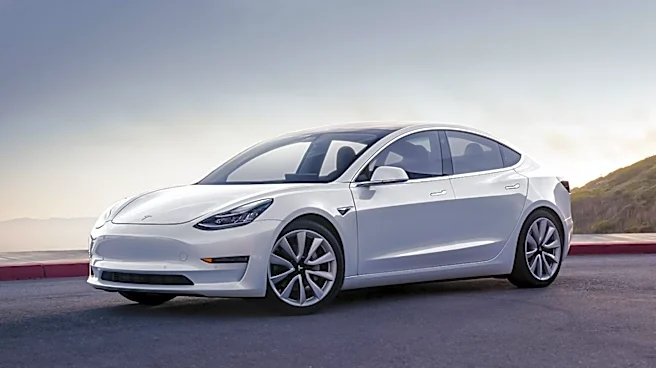







The Tesla Model 3, an electric sedan, has been a significant milestone in the automotive industry since its production began in 2017. As the fourth model released by Tesla, it followed the Model S, Model X, and Model Y, marking a new era in electric vehicle accessibility. This article delves into the development and production timeline of the Tesla Model 3, highlighting its journey from concept to reality.
Initial Development and Production Challenges
The concept of the Tesla Model 3 was first
introduced as part of Tesla's broader strategy to make electric vehicles more accessible to the general public. The production of the Model 3 began in 2017, but not without its challenges. Tesla initially set an ambitious production target of 5,000 vehicles per week by the end of 2017. However, this goal was not met until the end of the first half of 2018. The delay was primarily due to the complexities involved in producing the more expensive and intricate versions of the Model 3.
Tesla's strategy was to focus on the higher-end versions of the Model 3 initially, which included the larger battery packs and premium interiors. This approach allowed Tesla to maximize revenue while ramping up production capabilities. Despite these challenges, Tesla managed to maintain a steady increase in production, eventually reaching the desired output levels by the end of 2018.
Expansion and Global Reach
As production stabilized, Tesla expanded its reach to international markets. In early 2019, the company began shipping the Model 3 to Europe and China, marking a significant step in its global expansion strategy. The initial shipments included only the Performance and Long Range versions, with the entry-level Standard Range model following later in the year.
Tesla's Gigafactory in Shanghai played a crucial role in this expansion. The factory was set to produce the Model 3 exclusively, with plans to eventually include the Model Y. This strategic move not only increased Tesla's production capacity but also allowed the company to cater to the growing demand for electric vehicles in China, one of the largest automotive markets in the world.
Achievements and Future Prospects
By the end of 2019, the Tesla Model 3 had become a best-seller in several countries, including the United States, the Netherlands, and Norway. The vehicle's success was attributed to its competitive pricing, impressive range, and advanced features. In 2019 alone, Tesla sold over 300,000 Model 3 units worldwide, with the United States accounting for more than half of these sales.
Looking ahead, Tesla aims to further increase production and continue its global expansion. The company's focus on innovation and efficiency has positioned the Model 3 as a leader in the electric vehicle market. As Tesla continues to refine its production processes and expand its manufacturing capabilities, the Model 3 is expected to remain a key player in the transition to sustainable transportation.