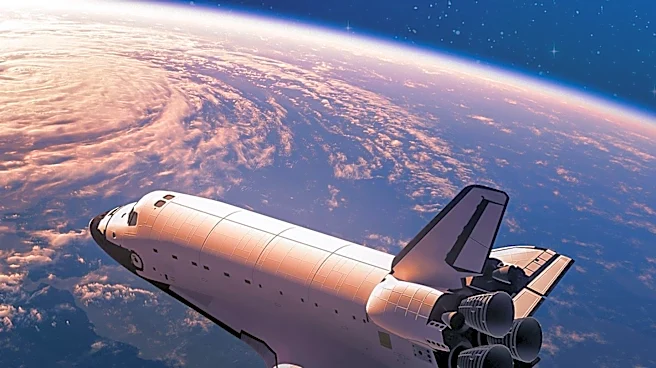


The STS-41-G mission, launched on October 5, 1984, aboard the Space Shuttle Challenger, stands out in the history of NASA's Space Shuttle program for its numerous groundbreaking achievements. As the 13th flight of the program and the sixth for the Challenger, it pushed the boundaries of space exploration by setting several significant precedents. This mission not only expanded the capabilities of human spaceflight but also diversified the representation
among astronauts, marking a pivotal moment for international collaboration and gender inclusion in space.
Expanding the Crew: A Record-Setting Team
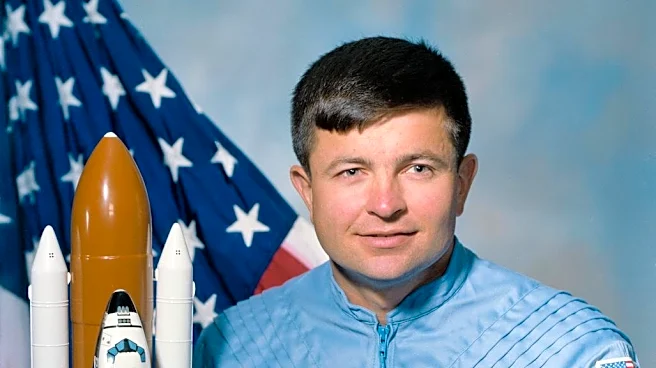
One of the most notable aspects of STS-41-G was its crew size. It was the first shuttle mission to carry a crew of seven, the largest flight crew ever to fly on a single spacecraft at that time. This expanded crew included commander Robert L. Crippen, who made his fourth Shuttle flight and became the first American astronaut to complete two space missions in the same calendar year. The team also featured pilot Jon A. McBride, mission specialists David C. Leestma, Sally K. Ride, and Kathryn D. Sullivan, and payload specialists Paul D. Scully-Power and Marc Garneau.
This mission also marked the first time two female astronauts, Sally K. Ride and Kathryn D. Sullivan, had flown together on a single mission. Their presence underscored a growing recognition of women's roles in space exploration. Furthermore, the crew was internationally diverse, including the first Australian-born person to journey into space, Paul D. Scully-Power, and the first Canadian astronaut, Marc Garneau, who was also the first Canadian citizen to serve as a Shuttle crew member.
Historic Extravehicular Activity and Scientific Endeavors
A major highlight of the STS-41-G mission was the extravehicular activity (EVA) performed by Kathryn D. Sullivan and David C. Leestma on October 11, 1984. This 3-hour spacewalk was historic as Sullivan became the first American woman to walk in space. During their EVA, they demonstrated the Orbital Refueling System (ORS), proving the feasibility of refueling satellites in orbit, a critical capability for extending the operational life of spacecraft.
Beyond the EVA, the mission was packed with scientific objectives. Nine hours after liftoff, the Earth Radiation Budget Satellite (ERBS) was deployed. This 2,307 kg satellite, boosted into an orbit 560 km above Earth, was the first of three planned satellites designed to measure solar energy and its reradiation into space, as well as study the seasonal movement of energy from the tropics to the polar regions. Another significant activity involved the Shuttle Imaging Radar-B (SIR-B), an improved version of a device previously flown on STS-2. The SIR-B was part of the OSTA-3 experiment package, which also included the Large Format Camera (LFC) for Earth photography, a MAPS camera for air pollution measurement, and a feature identification and location experiment (FILE) with TV and still cameras.
International Contributions and Mission Duration
The international flavor of the crew extended to the scientific contributions of the mission. Payload Specialist Paul D. Scully-Power, an employee of the U.S. Naval Research Laboratory, conducted a series of oceanography observations. Marc Garneau, the Canadian astronaut, carried out a series of experiments sponsored by the Canadian government, known as CANEX. These experiments covered a range of fields including medical, atmospheric, climatic, materials, and robotic science. Additionally, a variety of Getaway Special (GAS) canisters were flown, containing diverse materials testing and physics experiments.
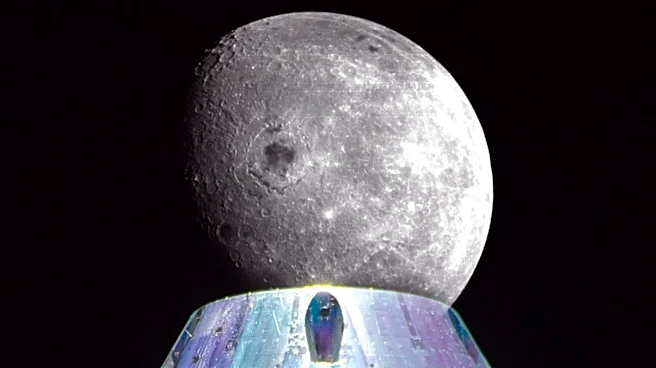
The STS-41-G mission lasted for 8 days, 5 hours, 23 minutes, and 33 seconds. During this time, the Challenger traveled an impressive 5,293,847 kilometers (3,289,444 miles) and completed 133 orbits. The mission concluded with a landing at the Shuttle Landing Facility at Kennedy Space Center on October 13, 1984, at 12:26 p.m. EDT, making it the second shuttle mission to land at that location. The legacy of STS-41-G, with its numerous firsts and significant scientific contributions, continues to resonate, even with one of its Orbital Maneuvering System (OMS) engines being reused for the Orion capsule on the Artemis I test flight almost forty years later.