



The Automated Teller Machine (ATM) has become an indispensable part of modern financial life, allowing individuals to manage their money with unprecedented flexibility. However, the journey to the ubiquitous ATM we know today was a long one, marked by various innovations, challenges, and the contributions of several key figures. From early, limited-function prototypes to sophisticated networked devices, the ATM's evolution reflects a continuous drive
towards greater convenience and accessibility in banking.
Pioneering Concepts and Early Prototypes
The idea of automated banking transactions predates the widespread adoption of ATMs. Luther Simjian is often credited with introducing the concept of an automated banking machine, and he held a patent for what has been described as a precursor to the ATM. In 1957, Simjian developed the first concept and patent for such a device, followed by a prototype in 1960. His invention, known as the Bankograph, was an automatic deposit machine designed to accept cash and check deposits at any time. It featured a camera inside that would take snapshots of the deposits, providing customers with copies as receipts.
The Bankograph was introduced to the public in 1961, with several units placed in City Bank of New York lobbies for a six-month trial. However, this early attempt at automated banking faced limited appeal and was ultimately discontinued. Simjian noted that the primary users were those who preferred not to interact with tellers face-to-face, and the bank determined there weren't enough such customers to make the venture profitable. This early experience highlighted the need for broader customer acceptance and more comprehensive functionality for automated banking solutions.
The Emergence of Cash Dispensers
While Simjian's Bankograph focused on deposits, the demand for automated cash dispensing grew. In the United States, the Docutel company made a significant breakthrough. Don Wetzel, Docutel's Vice President of Product Planning, was inspired to adapt the company's existing baggage handling technology to create a cash dispenser after experiencing long teller lines in 1968. Work on the prototype began in 1969, and Wetzel, along with two other Docutel engineers, secured a patent for their invention in 1973.
The first working Docutel ATM, sometimes called a "Docuteller," was installed at a Chemical Bank branch in Rockville Centre, New York, on September 2, 1969. This machine was designed to dispense a fixed amount of cash when a user inserted a specially coded card. Chemical Bank celebrated this innovation, announcing that their bank would "never close again." Despite initial hesitation from bank executives regarding the high cost of the machines and potential customer resistance, the convenience of 24/7 cash access proved to be a powerful driver for adoption.
Interbank Networks and Modern Functionality
The early ATMs were often standalone units, but a major leap in their evolution came with the development of interbank networks. Most modern ATMs are connected to these networks, which allow customers to withdraw and deposit money from machines that do not belong to their own bank, or even in foreign countries. Examples of these networks include NYCE, PULSE, PLUS, Cirrus, and STAR. This connectivity transformed ATMs from isolated cash dispensers into integral parts of a global financial system.
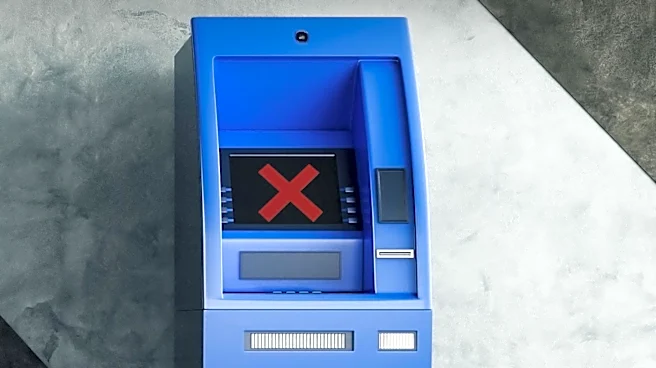
Today's ATMs are sophisticated devices, typically comprising a CPU, a magnetic or chip card reader, a PIN pad, a secure cryptoprocessor, a display, function keys or a touchscreen, and a record printer. They have evolved from custom hardware architectures to adopt personal computer-like architectures, utilizing USB connections, Ethernet, and IP communications, and running personal computer operating systems. This technological advancement has enabled ATMs to offer a wider range of services beyond simple cash withdrawals and balance checks, including transferring funds, depositing checks, and even purchasing postal stamps, solidifying their role as essential tools in contemporary banking.