Giants Stadium, a prominent venue in East Rutherford, New Jersey, from 1976 to 2010, was not only known for hosting major sporting events and concerts but also for its constantly evolving playing surfaces. The stadium's need to accommodate a diverse range of activities, from NFL games to international soccer matches, led to a series of changes in its field technology. These transformations highlight the challenges of maintaining a multi-purpose stadium and the ongoing
quest for optimal playing conditions for different sports.
From AstroTurf to Temporary Grass
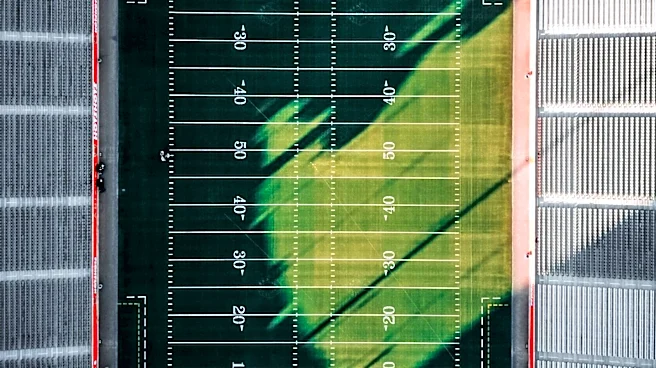
Upon its opening in 1976, Giants Stadium featured an AstroTurf playing surface, which remained in place until the end of the 1999 NFL season. This artificial turf was a common choice for stadiums of that era, offering durability and consistency. However, the stadium's role as a host for the 1994 FIFA World Cup necessitated a significant change. For the World Cup matches, the AstroTurf was covered by Bermuda grass sod. This temporary grass surface was specifically chosen to be identical to the one used at the Rose Bowl, where the other semifinal and the finals were held, ensuring that both teams in the finals would have played on consistent surfaces. After the World Cup concluded, the grass was removed, as it would not have survived the New Jersey winter conditions.
The Challenge of Co-Tenancy and Interchangeable Trays
The introduction of the MetroStars soccer team as a tenant brought further complexity to the playing surface situation. Each spring, the MetroStars installed a grass field using interchangeable trays. However, this grass field had to be removed prior to the football season, forcing the soccer team to play the remainder of its season on the AstroTurf field used by the football teams. This arrangement highlighted the logistical difficulties of sharing a stadium between sports with different surface requirements. Interestingly, when the New York Cosmos previously called Giants Stadium home, they played exclusively on the stadium's artificial surface and never utilized a grass field.
The Shift to FieldTurf
In 2000, a new system was implemented. The AstroTurf was replaced by a system of interchangeable grass trays, similar to those used for soccer. However, the original AstroTurf was kept in place underneath these trays to aid in draining the field when it became wet. Despite this innovation, the conditions of these grass fields often worsened as the season progressed. Over the next three years, the field quality was frequently rated as low as the old, hard AstroTurf had been. This led to another significant change: Giants Stadium finally scrapped the grass system in favor of FieldTurf for the 2003 season. FieldTurf, a newer generation of artificial turf, remained the playing surface until the stadium's closure in 2010, providing a more consistent and durable solution for the stadium's diverse needs.