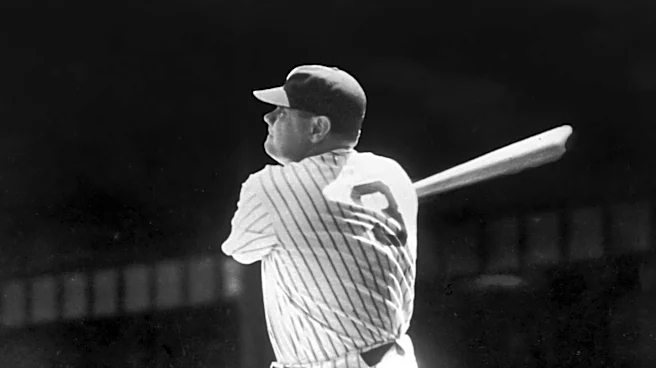





Babe Ruth, a legendary figure in American baseball, faced a private and ultimately losing battle with cancer in his final years. His illness, which began in 1946, was a challenging period marked by severe symptoms, various treatments, and a diagnosis that was kept from him. The progression of his disease and the medical efforts to combat it paint a poignant picture of the final chapter in the life of an American icon.
Onset and Diagnosis of a Grave Illness
In 1946, Babe Ruth began experiencing
troubling symptoms, including severe pain over his left eye and difficulty swallowing. These alarming signs prompted medical investigation, leading to tests conducted at French Hospital in New York. The results of these examinations revealed a grim diagnosis: an inoperable malignant tumor located at the base of his skull. Further medical analysis identified a lesion in his neck, which doctors diagnosed as nasopharyngeal carcinoma. This specific type of throat cancer was also referred to as "lymphoepithelioma."
A physician who later reviewed Ruth's autopsy in 1998 offered a retrospective insight into the potential origins of his illness. This review concluded that Ruth's lifelong use of tobacco "probably played a part" in the development of his cancer. The initial diagnosis in 1946 marked the beginning of a two-year struggle against a disease that would ultimately claim his life, despite the best medical efforts of the time.
The Unsuccessful Quest for Treatment
Over the subsequent eighteen months following his diagnosis, Babe Ruth underwent a series of treatments in an attempt to combat the aggressive cancer. However, these interventions proved to be largely ineffective, and his health visibly deteriorated, with Ruth slowly and notably withering. The therapies available during that era were often painful and included X-ray therapy, a common radiation treatment of the time.
In addition to radiation, Ruth was also injected with female hormones, a treatment approach that reflects the experimental nature of cancer care in the mid-20th century. An attempt was made through surgery to remove the mass, but this procedure was unsuccessful. Doctors also explored newer, more experimental methods, making Ruth one of the first cancer patients to receive sequential radiation and chemotherapy treatment. He was concurrently given experimental drugs, which initially showed some promise, leading to a temporary improvement in his health and a brief remission. Unfortunately, this period of relief proved to be short-lived and temporary.
The Final Days and Passing of a Legend
Despite the array of treatments and the initial, albeit temporary, improvements, the cancer continued its relentless progression. Babe Ruth died in his sleep on August 16, 1948, at 8:01 p.m. He passed away at Memorial Hospital in New York City, at the age of 53. Reverend Thomas F. Kaufmann, who administered the last sacrament, later described Ruth's passing as a "beautiful death," noting that he "said his prayers and lapsed into a sleep. He died in his sleep."
Dr. Hayes Martin officially announced Ruth's death, confirming that the cause was cancer. A poignant detail of his final illness was that only his family had been informed of the full diagnosis; Ruth himself had not been told the true nature of his condition. Following his death, Ruth's body was transported from the hospital to the Universal Funeral Chapel, where his family allowed mourners to visit and pay their respects after 3:00 p.m. In 2008, Dr. William James Maloney, a dentist and associate professor at New York University, further proposed that Ruth died specifically of nasopharyngeal carcinoma, reinforcing the initial diagnosis.