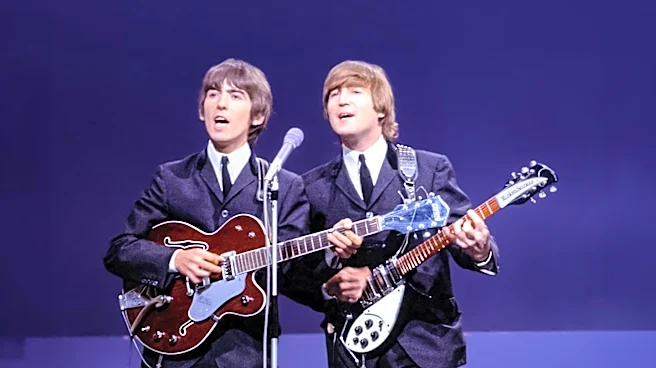









Apple Records, founded by The Beatles in 1968, was a groundbreaking venture in the music industry. Initially created as a subsidiary of Apple Corps, the label aimed to provide a creative outlet for the band and other artists. Despite its promising start, Apple Records faced challenges that led to its decline by the mid-1970s. This article explores the historical timeline of Apple Records, highlighting key events and transitions that shaped its journey.
The Early Years: 1968-1969
Apple Records was launched in 1968, marking a new chapter for The Beatles. The label was intended to be a creative hub for the band and a platform for other talented artists. During its early years, Apple Records enjoyed commercial success with artists like Mary Hopkin and Badfinger. The label also played a role in discovering acts such as James Taylor and Billy Preston, who later achieved greater success with other labels. Despite these achievements, the label's operations were heavily influenced by the management style of Allen Klein, who took over in 1969.
The Beatles' vision for Apple Records was ambitious, aiming to revolutionize the music industry by providing artists with more creative freedom. However, the label's operations were often overshadowed by internal conflicts and management issues. Klein's tenure was marked by financial disputes and disagreements with the band, which ultimately affected the label's stability.
Transition and Decline: 1970-1976
By the mid-1970s, Apple Records had shifted its focus primarily to releasing solo recordings of The Beatles. Although the label continued to operate, it became more of a cosmetic addition to the band's releases, as they were still under contract with EMI. The label's decline was further accelerated by the end of EMI's contract with The Beatles in 1976, leading to the winding up of Apple Records.
During this period, the label struggled to maintain its initial momentum. The departure of key artists and the lack of new signings contributed to its decline. The label's inability to adapt to the changing music industry landscape also played a role in its downfall.
Revival and Legacy: 1990s to Present
Apple Records experienced a revival in the 1990s when many of its original albums were reissued on compact disc. This reactivation allowed the label to oversee new Beatles releases, such as the Anthology and 1 albums, as well as the 2009 Beatles remastering program. In 2010, Apple Records embarked on a second remastering and reissuing of its back catalog.
Despite its challenges, Apple Records left a lasting legacy in the music industry. Its innovative approach to artist management and creative freedom set a precedent for future labels. The label's influence continues to be felt through the ongoing reissues and remastering of Beatles albums, ensuring that its impact endures.