


The Duryea Motor Wagon Company, and later Charles Duryea's independent ventures, played a crucial role in the early evolution of the American automobile. From the rudimentary one-cylinder motor wagon to the innovative, yet ultimately unsuccessful, Duryea GEM, the vehicles produced under the Duryea name reflected the rapid technological advancements and design philosophies of the late 19th and early 20th centuries. This journey showcases a continuous
pursuit of reliability, affordability, and suitability for the challenging American road conditions of the era.
The Pioneering Motor Wagon and Early Production Models
The first significant vehicle from the Duryea brothers was the Duryea Motor Wagon, a one-cylinder, four-horsepower car, first demonstrated in 1893. This early model was a foundational step, proving the concept of a successful gas-engine vehicle in the U.S. Its design incorporated essential components like a gasoline engine, marking a departure from steam or electric power. The success of this initial design led to commercial production, with the first ten production vehicles sold in the United States by 1896. These early automobiles were crucial in establishing the viability of the gasoline-powered car for a nascent market.
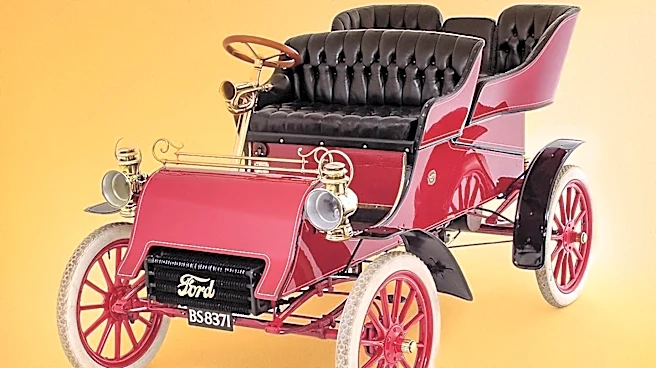
Following the brothers' separation, Charles Duryea continued to innovate. By 1902, operating as the Duryea Power Company, he was manufacturing a three-wheel, three-cylinder, gasoline-powered automobile. These vehicles were noted for their power and reliability, achieving a top speed of 20 miles per hour. They found a ready market, particularly among doctors who valued their performance. By 1905, the company expanded its offerings to include the four-wheel Phaeton, which sold for $1,600, indicating a move towards more sophisticated and varied models as the market matured.
Design Innovations and the Quest for Affordability
After the collapse of his business in 1907, Charles Duryea remained undaunted and continued to pursue innovative automobile designs. He introduced the "Buggyaut," a new automobile featuring significant design innovations. This model incorporated a two-cylinder, air-cooled engine, a departure from earlier liquid-cooled systems, and was designed with large wheels specifically for rural markets and unpaved roads. The Buggyaut was conceived as an inexpensive auto, with a simple body design mounted on the side bars of the chassis, in the manner of a traditional buggy, making it light and easy to ride. A two-passenger model, complete with a top, was priced at an affordable $700, reflecting Duryea's aim to make automobiles accessible to a broader audience.
Charles Duryea's final attempt to create a "car for the people" was the Duryea GEM, introduced in 1916. This vehicle was a cross between an automobile and a motorcycle, featuring a newly designed engine and suspension. Advertised as the "Biggest Idea in the History of the Motor Car and the Last Word in Automobile Construction," the GEM aimed to combine the comfort and stability of an automobile with the simplicity, handling, and economy of a motorcycle. It was remarkably affordable at only $250 and boasted an impressive fuel efficiency of 65 miles per gallon. Despite these innovations and its affordability, lack of funding ultimately forced the project's abandonment, with only six units believed to have been built. The GEM represented the culmination of Charles Duryea's design philosophy, emphasizing practicality and accessibility, even as it marked the end of his direct involvement in automobile manufacturing.