





Suva, the capital and most populous settlement of Fiji, has a rich history marked by significant transformations. Originally a small village, its strategic location and the limitations of earlier colonial settlements led to its designation as the capital. This shift initiated a period of growth and development that saw Suva evolve from a nascent colonial outpost into a bustling metropolitan area and a vital regional hub in the South Pacific. Its journey
reflects the broader historical currents that shaped Fiji and the wider Pacific region.
The Genesis of a Capital
In 1868, Suva was merely a small village when the Bauan chieftain, Seru Epenisa Cakobau, granted a substantial tract of land, approximately 5,000 square kilometers (1,900 sq mi), to the Australian-based Polynesia Company. This exchange was made in return for the company's commitment to settle debts owed to the United States. A significant portion of this land, about 575 square kilometers (222 sq mi), was situated near Suva. The initial ambition of the Polynesia Company was to establish a cotton farming industry in the area; however, the local land and climate proved unsuitable for this endeavor.The trajectory of Suva changed dramatically in 1874 when control of the Fiji Islands was ceded to the United Kingdom. Just three years later, in 1877, the colonial authorities made the pivotal decision to relocate the capital from Levuka, Ovalau, Lomaiviti, to Suva. This move was necessitated by Levuka's restrictive geography, which was nestled between a steep mountain and the sea, making any significant expansion of the town impractical. Colonel F. E. Pratt of the Royal Engineers was appointed Surveyor-General in 1875 and, with assistance from W. Stephens and Colonel R. W. Stewart, designed the new capital in Suva. The official transfer of the administration from Levuka to Suva was finalized in 1882, cementing Suva's new role.
Growth and Urban Expansion
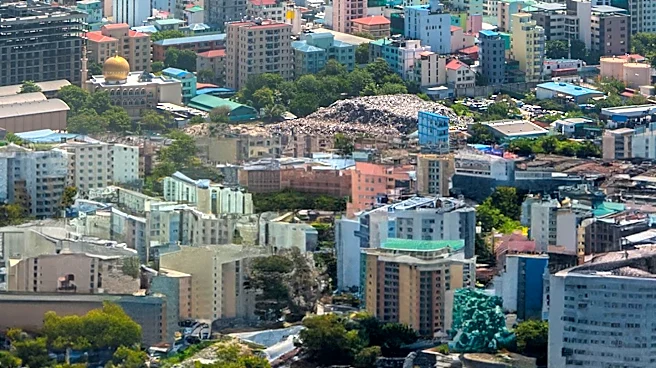
Suva's status as a municipality was formally recognized in 1910, under the Municipal Constitution Ordinance of 1909. For many years, its area remained relatively small, encompassing just one square mile. However, this began to change in 1952 when Suva undertook significant annexations, incorporating the Muanikau and Samabula wards. This expansion dramatically increased its territory to 13 square kilometers (5.0 sq mi). In October of that same year, Suva achieved another milestone, being officially designated as a city—a first for Fiji.Further expansion followed with the annexation of Tamavua. More recently, Suva extended its boundaries once more by integrating the Cunningham area at its northern edge. This continuous growth has led to urban sprawl, resulting in the development of numerous suburbs beyond the city limits. These suburbs, together with the city itself, form the metropolitan area now known as the Greater Suva Area. This ongoing expansion underscores Suva's dynamic development and its increasing importance as an urban center.
Suva as a Regional Powerhouse
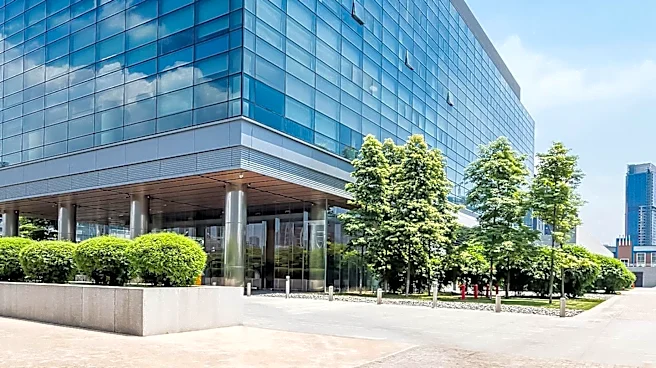
Beyond its administrative and geographical growth, Suva has solidified its position as Fiji's political, economic, and cultural center. It is also recognized as the economic and cultural capital of the South Pacific, hosting the regional headquarters for many major international corporations, international agencies, and diplomatic missions. The city boasts a vibrant arts and performance scene and is gaining recognition as the region's fashion capital.Suva's role as a regional hub was further highlighted when it hosted the South Pacific Games in 2003 for the third time in the event's 40-year history. To prepare for this significant event, the Fijian government, supported by a $16 million aid package from the People's Republic of China, funded the construction of new facilities. These included a new gymnasium, an indoor sports center, a swimming pool, a stadium, a field hockey pitch, and grandstands in the areas surrounding Suva. This investment not only facilitated the games but also enhanced Suva's infrastructure and its capacity to host major international events, reinforcing its status as a leading city in the Pacific.