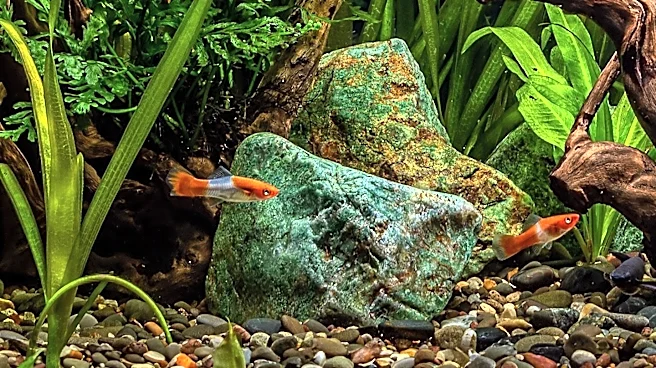







The term "Molly" in the aquatic world refers to a fascinating group of fish belonging to the Mollienesia subgenus. This classification encompasses several popular species, most notably *Poecilia sphenops* (the short-finned molly), *Poecilia latipinna* (the sailfin molly), and *Poecilia velifera* (the Yucatan molly). These species are all part of the *Poecilia sphenops* complex, a group of livebearing fish native to the vibrant waters of Central America.
Their striking appearance, adaptability, and the ease with which they can be crossbred have made them incredibly popular in the aquarium trade, leading to a rich diversity of "fancy mollies" enjoyed by enthusiasts worldwide.
Key Species within the Mollienesia Subgenus
At the heart of the Mollienesia subgenus are several distinct species, each contributing to the overall understanding and popularity of mollies. *Poecilia sphenops*, often called the Mexican molly, is native to Mexico, Guatemala, and Honduras. It is characterized by its shorter dorsal fin, a trait that places it within the shortfin molly clade. Historically, this species was thought to be very widespread, with many local variations, but modern taxonomy recognizes these variants as distinct species within the *P. sphenops* complex.
Another significant member is *Poecilia latipinna*, known as the sailfin molly, and *Poecilia velifera*, the Yucatan molly. These two species are distinguished by their notably longer dorsal fins compared to the shortfin mollies. While *P. sphenops* is frequently confused with *P. mexicana*, a key anatomical difference lies in their inner jaw teeth: *P. sphenops* has tricuspid teeth (three points), whereas *P. mexicana* has unicuspid teeth (a single point). This distinction is vital for accurate classification within the complex.
The Phenomenon of Fancy Mollies
The appeal of mollies in the ornamental fish trade largely stems from the creation of "fancy mollies." These are domestic hybrids produced by crossbreeding different molly species. For instance, *P. sphenops* has been extensively crossbred with *P. latipinna* and *P. velifera* to develop a vast array of color patterns, fin shapes, and body forms that are highly sought after by aquarium hobbyists. This hybridization process has allowed for the development of unique and visually stunning fish that often do not occur in nature.
This practice of crossbreeding not only enhances the aesthetic variety available to consumers but also highlights the genetic compatibility among species within the Mollienesia subgenus. The resulting fancy mollies are a testament to the adaptability and genetic plasticity of these fish, making them a cornerstone of the freshwater aquarium hobby. The continuous development of new strains ensures their enduring popularity and commercial value, driving a significant segment of the ornamental fish market.
Distribution, Habitat, and Ecological Impact
The natural distribution of the Mollienesia subgenus is centered in Central America, with species like *Poecilia sphenops* found in Mexico, Guatemala, and Honduras. These fish typically inhabit fresh and brackish waters, often in shallow, slow-flowing, or standing environments. Their diet primarily consists of algae and detritus, making them important grazers in their native ecosystems. However, due to their popularity as aquarium fish, various molly species and their hybrids have been introduced outside their native ranges. While many records of introduced mollies exist, it is sometimes difficult to ascertain the exact species due to the historical taxonomic complexities and the prevalence of hybrids. This widespread introduction underscores both their hardiness and the potential for ecological impacts in non-native environments, where they can establish populations and interact with local fauna.