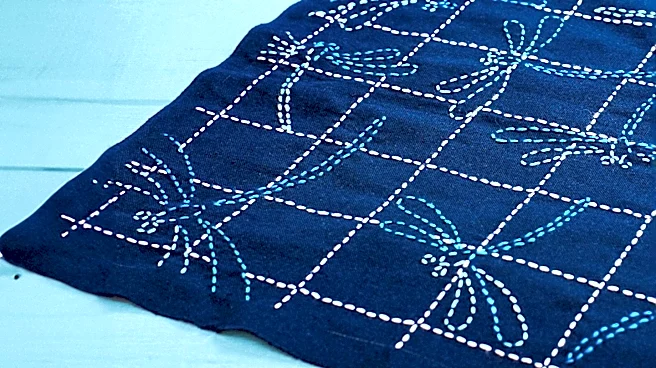







Sashiko, a traditional Japanese embroidery or stitching technique, literally translates to "little stabs." This craft is renowned for its distinctive white-on-blue appearance, a characteristic that emerged from the historical availability of white cotton thread and indigo-dyed blue cloth in Japan. While primarily recognized for its aesthetic appeal today, sashiko's origins are deeply rooted in practical necessity, evolving over centuries from a method
of reinforcing clothing to a form of decorative art used in quilts and embroidery samplers. Its journey reflects a fascinating blend of utility, resourcefulness, and artistic expression within Japanese culture.
The Edo Period: Birth of a Practical Craft
Sashiko first emerged during Japan's Edo period, which spanned from 1603 to 1867. In these early days, the embroidery was applied to clothing out of a fundamental need to strengthen homespun garments. Worn-out clothes were not simply discarded; instead, they were pieced together to create new garments, with sashiko's simple running stitches playing a crucial role in this process. This technique significantly increased the strength and durability of the fabric, making clothing last longer and providing essential warmth.
The practical applications of sashiko were diverse. It was commonly used to reinforce areas of clothing that experienced significant wear, such as around points of stress or friction. Beyond mere reinforcement, sashiko also served to attach patches to garments, further strengthening the fabric. Another vital function was layering thin fabrics together to create warmer clothing, a particularly important aspect in colder regions. This resourcefulness highlights the ingenuity of historical Japanese communities in making the most of their textile resources.
Meiji Era and Specialized Applications
By the Meiji period, from 1868 to 1912, sashiko had become well-established, evolving into a significant winter activity in northern farming communities. During the harsh winter months, when outdoor work was often impossible due to the cold, sashiko provided a productive indoor occupation. This period saw the technique solidify its place not just as a practical skill but also as a communal and seasonal tradition.
One notable specialized application of sashiko was in the creation of coats for firemen, known as *hikeshi banten*. These coats were designed to be thick and absorbent, a quality achieved through the layering and stitching of fabrics with sashiko. Before fire-fighting duties, these coats would be soaked in water, providing a degree of protection against flames. This specific use case underscores the material strength and functional benefits that sashiko could impart to textiles, moving beyond everyday clothing to specialized protective gear.
From Utility to Decorative Expression
While its origins were purely functional, sashiko gradually transcended its utilitarian roots to embrace decorative purposes. Although most sashiko primarily utilizes a plain running stitch technique, this simple stitch is adeptly employed to create intricate and repeated embroidered patterns. These patterns can be quite elaborate, transforming a functional stitch into a visually appealing design element.
Today, sashiko is not only used for reinforcing and repairing but also for purely decorative applications, such as in the creation of quilts and embroidery samplers. This evolution showcases the versatility of the technique, demonstrating how a craft born out of necessity can develop into a cherished art form. The distinctive white-on-blue aesthetic, while rooted in historical material availability, has become a hallmark of sashiko's decorative appeal, making it recognizable and admired worldwide for its elegant simplicity and profound history.