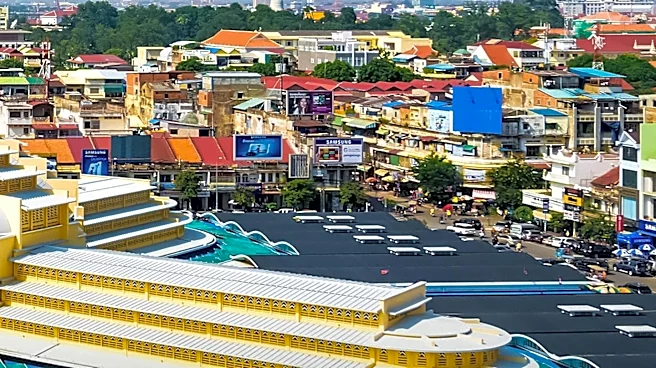







Phnom Penh's Central Market, known as Phsar Thum Thmei, is a landmark of architectural and historical significance. Completed in 1937, this art deco masterpiece stands as a testament to the city's development during the French protectorate era. With its distinctive design and bustling atmosphere, the Central Market remains a vital part of Phnom Penh's urban landscape.
Historical Background
The decision to build the Central Market was made in response to Phnom Penh's growing
population, which had reached 90,000 inhabitants by the end of the 1920s. The market was constructed on marshland in the center of the city's Chinatown, a project delayed by the Great Depression until 1934. Designed by city architect Jean Desbois and supervised by French architect Louis Chauchon, the market was completed in 1937 and inaugurated by King Sisowath Monivong.
Originally, the market was said to be the largest in Asia, reflecting the city's ambition to become a modern urban center. Despite its grandeur, the market faced challenges, such as wet season flooding, a reminder of the marshland it once occupied. Over the years, the surrounding gardens were replaced by temporary structures, increasing the number of stalls and the market's capacity.
Architectural Features
The Central Market is an architectural marvel, characterized by its bright yellow facade and 26-meter high central dome. The dome is complemented by four tall arch-roofed arms that extend diagonally across the block, creating vast hallways filled with countless stalls. This design not only provides ample space for vendors but also allows for natural light and ventilation, enhancing the shopping experience.
The market's construction was carried out by the Société indochinoise d'études et de construction, which had previously built markets in Battambang and Cholon. The use of reinforced concrete and art deco elements reflects the architectural trends of the time, making the Central Market a unique and enduring symbol of Phnom Penh's urban development.
Renovation and Legacy
From 2009 to 2011, the Central Market underwent a $4.2 million renovation funded by the French Development Agency. This restoration preserved the original reinforced concrete structure while adding new stall areas to accommodate the growing number of vendors. The renovation ensured that the market retained its historical and architectural significance while adapting to modern needs.
Today, the Central Market continues to operate as a bustling hub of commerce, offering a wide range of goods from souvenirs to jewelry. Its architectural beauty and historical legacy make it a must-visit destination for both locals and tourists, embodying the spirit of Phnom Penh's vibrant urban culture.