




The Whitney Museum of American Art, a prominent institution dedicated to American art, has a rich history marked by several significant relocations across New York City. Founded in 1930 by Gertrude Vanderbilt Whitney, a notable socialite, sculptor, and art patron, the museum's journey reflects its growth and changing needs. From its initial establishment in Greenwich Village to its modern home on Gansevoort Street, each move has shaped the museum's identity
and its capacity to showcase American artistic talent.
The Greenwich Village Origins
The museum's story began in Greenwich Village, a neighborhood known for its artistic community. In 1907, Gertrude Vanderbilt Whitney converted a stable on MacDougal Alley into her studio, which she later connected to an adjacent townhouse at 8 West 8th Street in 1914. This space, along with the Whitney Studio Club, served as a venue for young American artists to meet and exhibit their work. The interior of the 8th Street property was notably redesigned in 1918 by American artist Robert Winthrop Chanler, featuring an allegorical bas-relief ceiling, a 20-foot-high plaster and bronze fireplace, elaborate stained glass windows, and decorative screens.
It was in 1929, after the Metropolitan Museum of Art declined her offer of nearly 500 artworks she had collected, that Whitney decided to establish her own museum. In 1931, she commissioned architect Auguste L. Noel to convert three row houses at 8–12 West 8th Street into the museum's first official home, which also included a residence for herself. The Whitney Museum of American Art officially opened its doors on November 18, 1931. The museum later acquired 12 and 14 West 8th Street in 1943, further expanding its initial footprint in Greenwich Village.
Uptown Moves and Failed Mergers
Despite its strong beginnings, the Whitney Museum's presence in Greenwich Village was not permanent. In the 1940s, there were discussions and ultimately failed plans to integrate the Whitney's collections into the Metropolitan Museum of Art as part of the latter's 75th anniversary. This period of uncertainty eventually led to the museum seeking new quarters.
In 1954, the Whitney Museum made its first significant move uptown, relocating to a new building on 54th Street, situated between 5th and 6th Avenues. This move marked a new chapter for the institution, allowing for expanded exhibition space and a different urban context. However, this location was also temporary, as the museum eventually settled at 945 Madison Avenue in 1966. The original Greenwich Village building, with the addition of 14 West 8th Street, an Italianate house built in 1853–54, was later repurposed and became the New York Studio School of Drawing, Painting and Sculpture. This original building is now recognized as a U.S. National Historic Landmark and is listed on the U.S. National Register of Historic Places.
The Modern Era: Gansevoort Street
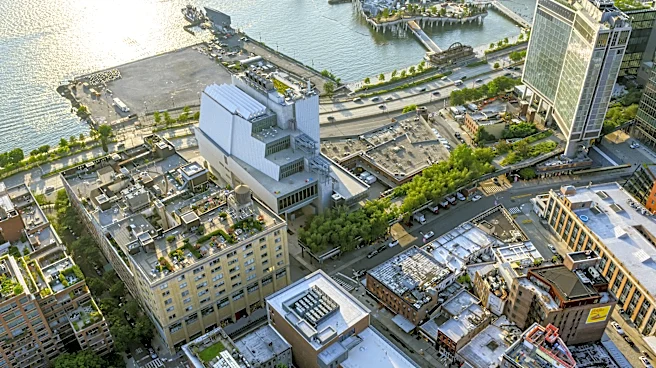
The Whitney Museum's most recent and perhaps most ambitious relocation occurred in 2015. The museum moved to its current building, designed by the renowned architect Renzo Piano, at 99 Gansevoort Street. This move significantly expanded its exhibition capabilities, providing 50,000 square feet of space. The new location in the Meatpacking District represents a modern vision for the museum, allowing it to continue its mission of showcasing contemporary American art in a state-of-the-art facility. This latest move underscores the museum's dynamic history and its ongoing commitment to evolving with the art world and the city it calls home.