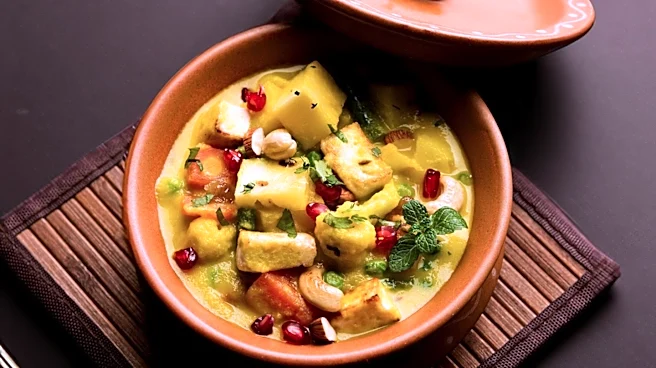








Korma, a rich and aromatic curry dish, holds a significant place in the culinary landscape of the Indian subcontinent. Its origins are deeply intertwined with Mughlai cuisine, a style of cooking that flourished under the Mughal Empire. This dish, characterized by its less intense flavors and more aromatic fragrances compared to other meat-containing dishes, has evolved over centuries, adapting to various tastes and cultural contexts. From its preparation
in royal kitchens to its presence at modern banquets and everyday meals, korma represents a fascinating blend of history, technique, and flavor that continues to captivate diners across the globe.
The Mughal Legacy and Early Evolution
Korma's roots are firmly planted in the Mughlai cuisine of the Indian subcontinent. Historical accounts suggest that kormas were a staple in the kitchens of the Mughal court. Food historian Neha Vermani notes that the dish first appears in cookery books dating back to the reign of Shah Alam, who ruled from 1643 to 1712. During the 18th century, cooks within the Mughal court began to refine and enrich the Persian-style stew that served as korma's precursor. This enrichment involved the incorporation of ingredients such as almonds, garlic, various spices, and yogurt, which collectively contributed to the distinctive character of the dish we recognize today.An interesting historical detail from Hyderabad in 1832 mentions a "korma" variety of pilau, which featured thinly sliced meat combined with rice. This indicates the versatility and adaptability of the korma concept even in its earlier forms, extending beyond just a braised meat or vegetable dish. The term "Shahi," meaning royal, is sometimes used for certain korma preparations, underscoring its prestigious status and association with the imperial court rather than being an everyday meal.
Anglo-Indian Adaptations and Global Reach
The culinary journey of korma did not stop within the Mughal courts. In the 19th century, as British influence grew in India, local cooks began to adapt traditional Indian dishes, including korma, to suit Anglo-Indian tastes. These adaptations often involved simplifying recipes and adjusting spice profiles. For instance, a traditional quarama from Lucknow might have included ghee, yogurt, cream, crushed almonds, cloves, cardamom, and saffron. However, an Anglo-Indian quorema or korma from 1869 presented a significantly different profile.This adapted version often omitted cream, almonds, or saffron, instead incorporating what were then considered standard British curry spices like coriander, ginger, and black peppercorns. This divergence highlights how korma, while retaining its core identity as a braised dish, was flexible enough to undergo substantial modifications based on regional and cultural preferences. These Anglo-Indian versions played a role in introducing korma to a wider audience, eventually contributing to its global popularity.
Korma in Contemporary Culture and Cuisine
Today, korma remains a widely enjoyed dish across the Indian subcontinent and beyond, featuring prominently in various social and culinary contexts. In Muslim wedding banquets, a mutton korma is a frequent offering, symbolizing celebration and tradition. Similarly, in the traditional wazwan, a grand banquet prepared by both Hindu and Muslim cooks for diverse celebrations, lamb and chicken kormas are common and cherished elements. This demonstrates the dish's broad appeal across different communities and occasions.Beyond festive gatherings, korma is also a common dish in "tora," a practice where dishes are sent to another's home, originating from historical restrictions on women's public presentation. In Pakistan, korma is particularly popular, often served at lunch and as a significant component of feasts that mark the end of daily fasts during Ramadan. The enduring presence of korma in these varied settings underscores its deep cultural integration and its continued relevance as a beloved culinary staple.