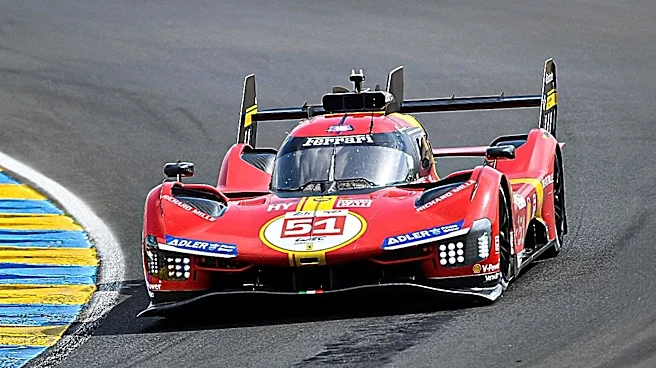


The United SportsCar Championship emerged as a significant development in American endurance racing, representing the merger of two prominent series: the American Le Mans Series and the Rolex Sports Car Series. This new competition, organized by IMSA, aimed to consolidate the landscape of sports car racing in the United States. The 2015 season marked its second edition, building upon the foundation laid in its inaugural year and featuring a comprehensive
schedule of races designed to test both drivers and manufacturers across various classes.
Formation and Structure of the Championship
The United SportsCar Championship was born from the unification of the American Le Mans Series and the Rolex Sports Car Series, bringing together different philosophies and car classes under a single banner. This merger was a pivotal moment for sports car racing in North America, creating a more streamlined and potentially more competitive environment. The championship is overseen by IMSA, which is responsible for its organization and the enforcement of its rules and regulations. The 2015 season, for instance, comprised a total of twelve events, showcasing a robust calendar for endurance racing enthusiasts.
Within the broader championship, a special mini-series known as the North American Endurance Championship (NAEC) was established. This series highlighted four of the most iconic and challenging endurance races on the calendar. These included the legendary 24 Hours of Daytona, the demanding 12 Hours of Sebring, the strategic 6 Hours of Watkins Glen, and the prestigious Petit Le Mans. These events are not only crucial for the overall championship but also carry significant weight and prestige on their own, drawing considerable attention from the racing community and fans alike.
Key Races and Manufacturer Involvement
The calendar for the United SportsCar Championship featured a diverse array of races, ranging from sprint events to multi-hour endurance challenges. Beyond the NAEC races, other notable events included the Grand Prix of Long Beach, the Grand Prix of Monterey, the Grand Prix of Detroit, and the Grand Prix of Mosport, among others. These races provided varied circuit types and conditions, ensuring a comprehensive test for the participating teams and their machinery. The involvement of major automotive manufacturers was a cornerstone of the championship's appeal and competitive depth.
In the 2015 season, various manufacturers achieved victories across different classes. For example, in the Prototype class, Ford secured a win at the 24 Hours of Daytona, while Chevrolet demonstrated strong performance with victories at Sebring, Long Beach, Monterey, Detroit, Watkins Glen, and Mosport. In the GT Le Mans (GTLM) class, Chevrolet and BMW each claimed multiple wins, with Porsche also securing victories. The GT Daytona (GTD) class saw Dodge, Porsche, and BMW all achieving top honors at different events, highlighting the competitive balance and diverse manufacturer participation across the championship's categories. The overall winner of the 2015 season was Action Express Racing, underscoring their consistent performance throughout the year.