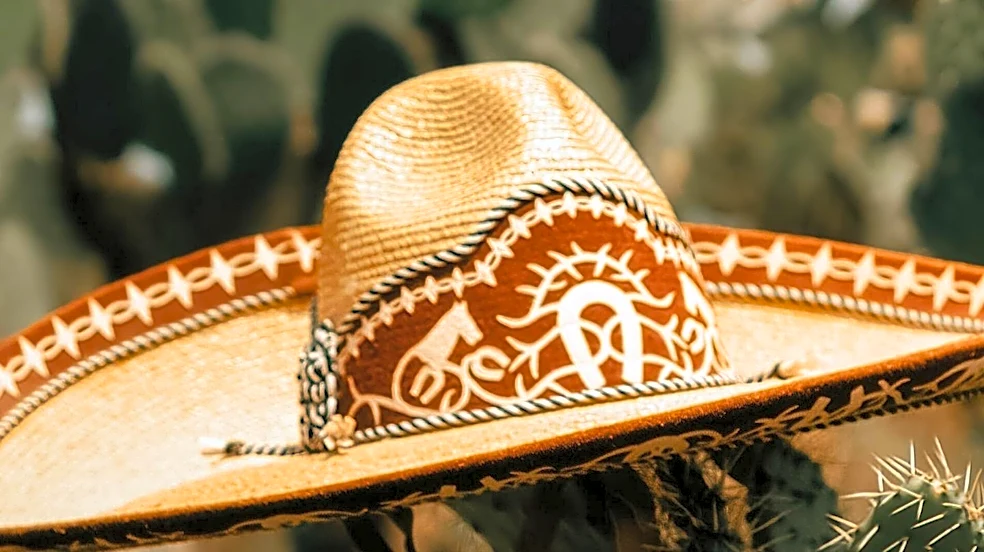







The sombrero, a wide-brimmed hat designed to offer significant protection from the sun, is deeply ingrained in Mexican culture. While the term "sombrero" in Spanish can refer to any hat, for most English speakers, it specifically denotes the traditional Mexican headwear, often called a *sombrero de charro* or *sombrero jarano*. This iconic hat typically features a high, pointed crown, an extra-wide brim that curves slightly upward at the edge, and
a chin strap to keep it securely in place. Its design is not merely functional but also symbolic, reflecting a rich history and evolving styles that have become synonymous with Mexican identity.
Early Forms and Colonial Influences
The precise origins of the Mexican-style sombrero are not fully known, but it is generally believed that its specific form developed among mestizo cowboys in Central Mexico. A potential precursor to this design was a hat style worn by wealthy Spanish landowners during the colonial era in regions like Andalusia and Navarre. These early Spanish styles likely influenced the development of the Mexican version, which then evolved to feature an even wider brim and a taller, conical crown, adapting to the specific needs and environment of Mexico.
Eighteenth-century depictions of clothing reveal a variety of hat styles, though all were relatively small with moderately wide brims. The rigidity of these brims varied, with some appearing flexible and drooping, while others seemed stiff. Crowns were consistently low, either flat or rounded. Light colors such as white and gray were common, likely chosen for their ability to reflect light and heat. Decorative elements were minimal, usually just a small ribbon or band around the crown. While specific material information is scarce for this period, it is inferred that some hats were made from palm fiber, while finer examples used materials like felt.
The Nineteenth Century: Emergence of the Jarano and Charro Styles
The 19th century marked a significant period for the Mexican hat, with the term *jarano* first being recorded. Initially, *jarano* was used broadly to refer to any wide-brimmed hat, regardless of its specific style or construction, and was considered synonymous with the Spanish word *chambergo*. In the early decades of 19th-century Mexico, particularly after the nation gained independence, smaller hats remained fashionable among charros and the wealthy elite. During this time, brims typically measured about 6 inches (15 cm) wide and were flat with very low crowns. Hat bands became more substantial and prominent, a style that would continue for many decades.
Hats from this era were commonly crafted from wool felt and often featured silver clasps to secure the chin strap. The most highly regarded hats were those produced in the city of Puebla, known as *Poblanos* or *jarano Poblano*, meaning 'Pueblan' or 'Pueblan-style jarano'. These hats typically had a moderately broad, flat brim, often worn slouched, and were usually light-colored, such as gray or *aplomado* (lead-colored). These lighter hues were favored because they effectively reflected light and heat, providing practical comfort in the Mexican climate.
Evolution of Charro Attire and Distinctive Features
An early foreign account of charro attire comes from the British explorer Edward B. Penny in 1824. He described the charro's hat as "low-crowned" with a wide brim, drawing a comparison to the hats worn by Quakers. Penny noted that these sombreros were made of wool, dyed in colors like brown, green, black, or gray. He also highlighted the decorative elements, stating that the shade was lined with gold lace and the band was a thick gold cord, ending in a gold tassel that rested on the brim. This detailed description provides insight into the appearance and ornamentation of charro hats in the early 19th century.
Between the 1820s and 1830s, another distinct style of charro hat emerged. This version was larger, featuring a medium-height, flat crown and a wider, moderately flexible brim. A very thin, ribbon-like band, often adorned with tassels that draped over the brim, characterized this style. However, this particular design fell out of fashion around the 1850s. By the mid-1840s, a new *jarano* hat style gained popularity, distinguished by a rigid, rather than flexible, brim, a medium-sized, flat crown, and a medium-width band that resembled a coiled sausage or snake. These various design evolutions underscore the sombrero's dynamic history and its deep connection to the evolving cultural expressions of Mexico, particularly through its association with mariachi musicians and charros.