




The lunge is a fundamental exercise characterized by a body position where one leg is extended forward with the knee bent and foot flat on the ground, while the other leg is positioned behind. This versatile movement is widely adopted by athletes for cross-training, by weight-trainers as a core fitness exercise, and by yoga practitioners as an integral part of various asanas. Unlike a split squat, the lunge actively engages the rear leg, contributing
to its effectiveness in targeting multiple muscle groups simultaneously.
Building Strength and Sculpting Muscles
Lunges are highly effective for strengthening, sculpting, and building several key muscles. These include the quadriceps, located in the thighs, the gluteus maximus, which forms the buttocks, and the hamstrings at the back of the thighs. The specific muscles emphasized can vary based on the lunge's length. A longer lunge tends to place more emphasis on the gluteal muscles, while a shorter lunge primarily targets the quadriceps.For beginners, the lunge is considered a basic movement that is relatively simple to perform. It can be executed using only bodyweight, making it accessible to individuals at various fitness levels. As individuals progress, weight trainers often seek to increase the exercise's difficulty. This can be achieved by holding dumbbells or kettlebells in each hand, or by placing a barbell across the neck and shoulders. When using dumbbells, grip strength can sometimes become a limiting factor, which might lead some practitioners to prefer the barbell lunge for heavier loads.
Variations and Safety Considerations
The lunge exercise offers several variations to enhance its challenge and target different aspects of fitness. One such variation is the plyometric lunge, also known as a split squat jump. This advanced form involves explosively jumping between lunge positions, adding a cardiovascular and power component to the exercise. This dynamic movement can significantly increase the intensity and engage fast-twitch muscle fibers.However, it is important to consider safety, especially with resistance training. Performing forward lunges in place is generally not recommended due to the potential shear force it can exert on the rear knee. This occurs when the front leg no longer provides adequate support, placing undue stress on the knee joint of the trailing leg. To mitigate this risk, many trainers advise performing lunges with a walking motion or stepping back into the lunge position, which can distribute the force more evenly and reduce strain.
The Lunge in Yoga Practice
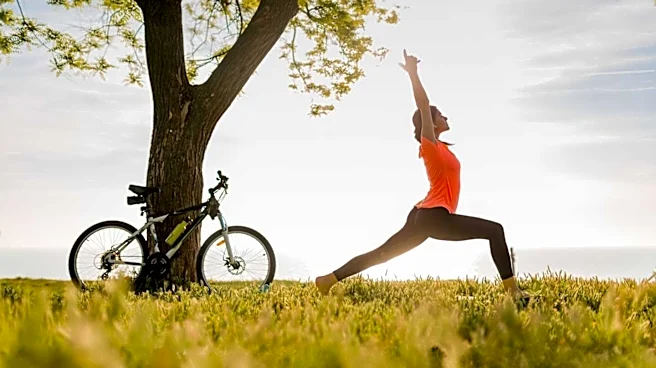
Beyond strength training, the lunge holds a significant place in yoga. In yoga, the lunge position is often incorporated into various asanas, contributing to flexibility, balance, and strength. It helps to stretch the hip flexors of the back leg and strengthen the muscles of the front leg, promoting overall lower body stability and mobility. The controlled nature of yoga practice allows for a mindful approach to the lunge, focusing on alignment and breath.Whether used for building muscle, improving athletic performance, or enhancing flexibility, the lunge remains a foundational exercise. Its adaptability, from bodyweight movements to weighted variations and plyometric jumps, makes it a valuable component in diverse fitness regimens. Understanding the proper form and variations allows individuals to effectively incorporate lunges into their routines while minimizing the risk of injury.