





Resonators are fascinating devices that play a crucial role in various fields by exhibiting resonant behavior. They naturally oscillate with greater amplitude at certain frequencies, known as resonant frequencies, compared to others. This article delves into the basic principles of resonators, exploring how they function and their applications in different domains.
The Principle of Resonance
At the heart of a resonator's function is the principle of resonance. Resonance occurs
when a system oscillates at a particular frequency with maximum amplitude. This is due to the system's natural tendency to oscillate at these frequencies, which are determined by its physical properties. In a resonator, these oscillations can be either electromagnetic or mechanical, including acoustic vibrations.
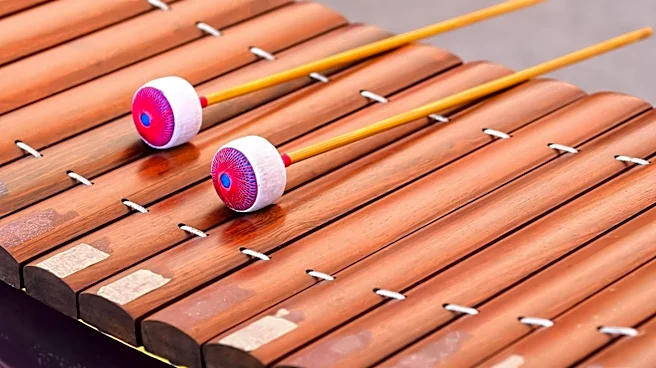
Resonators are designed to either generate waves of specific frequencies or to select particular frequencies from a signal. This makes them invaluable in various applications, from musical instruments to electronic devices. For instance, musical instruments use acoustic resonators to produce sound waves of specific tones, enhancing the richness and quality of the sound produced.
Types of Resonators
Resonators come in different forms, each suited to specific applications. A common type is the cavity resonator, where waves exist in a hollow space inside the device. In electronics and radio, microwave cavities made of hollow metal boxes are used in transmitters and receivers to control frequency. These replace tuned circuits used at lower frequencies, offering more precise control.
Another type is the acoustic cavity resonator, known as the Helmholtz resonator, where sound is produced by air vibrating in a cavity with an opening. This type of resonator is often used in musical instruments to amplify sound. Additionally, quartz crystals in electronic devices like radio transmitters and watches use resonators to produce oscillations of very precise frequencies.
The Role of Material and Design
The material and design of a resonator significantly influence its performance. Resonators are often homogeneous objects where vibrations travel as waves at a constant velocity, bouncing back and forth between the sides. The material, viewed as millions of coupled moving parts, can have millions of resonant frequencies, though only a few are practically used.
The design of a resonator, such as its shape and the distance between its sides, determines the pattern of standing waves formed at resonant frequencies. For resonance to occur, the phase of a sinusoidal wave after a round trip must equal the initial phase, allowing the waves to self-reinforce. This intricate interplay of material and design is what enables resonators to perform their essential functions across various applications.