


The AMA Superbike Championship stands as the premier motorcycle road racing series in the United States, a testament to a rich history that began with grassroots enthusiasm and evolved into a highly competitive professional sport. Organized by MotoAmerica and sanctioned by both the American Motorcyclist Association (AMA) and the FIM, this series features "highly modified, production based liter class motorcycles" competing on top tracks across the country.
Its journey reflects the changing landscape of motorcycle technology, racing regulations, and commercial interests, all while maintaining its core identity rooted in production-based machines.
The championship's origins can be traced back to the AMA Open Production event in 1973, a time when American road racing was dominated by Grand Prix-style machines. The evolution from these early, experimental races to a formalized national championship highlights a unique American narrative in the global Superbike racing scene, driven by both rider passion and manufacturer innovation.
Early Roots: Open Production and the Rise of Performance Bikes
In the early 1970s, AMA road racing primarily consisted of Heavyweight and Lightweight classes, featuring Grand Prix-style machines. These bikes, while based on standard production models, were often purpose-built or heavily modified by factory-backed teams, making them less accessible to the average enthusiast. However, the early 1970s also saw the introduction of powerful, large-displacement road bikes like the BMW R90S, Kawasaki Z1, and Ducati 750SS, which brought unprecedented performance to the showroom floor and required minimal modification to be race-ready.
This surge in high-performance production bikes sparked a growing desire for production-based racing among club racers across the country. Sensing this demand, AMA race promoters Gavin Trippe and Bruce Cox invited production racers to compete at the 1973 Laguna Seca AMA National Road Race Weekend. The Open Production class, with regulations requiring motorcycles to retain their stock appearance, exhaust, brakes, instruments, and carburetors, proved immensely popular. Yvon Duhamel won the first Open Production race on a Kawasaki Z1, captivating both fans, who enjoyed watching accessible machines compete, and racers, who appreciated the low barriers to entry. The success led to other Road Race Nationals incorporating production races, and by 1975, the AMA introduced an official road racing category for production class motorcycles, laying the groundwork for the Superbike Championship.
Superbike Production Era: European Handling vs. Japanese Power
By 1976, the popularity of production racing, particularly the Open Production class, had grown sufficiently for the AMA to elevate it to an official championship class, renaming it Superbike Production. The rules mandated that motorcycles retain their stock chassis and original silhouette, though engines could be modified as long as they kept the stock stroke and adhered to a 1000cc capacity limit, while still requiring stock carburetors and exhausts. This era saw a fascinating dynamic unfold between European twin-cylinder bikes, such as the BMW R90S, Ducati, and Moto Guzzi, known for their superior handling, and the more powerful Japanese inline-fours from Kawasaki, Suzuki, and Honda.
Initially, the European machines often had an advantage, with Reg Pridmore winning the inaugural 1976 championship on a BMW R90S. The powerful Japanese four-cylinders, while boasting more horsepower, struggled with flexible double cradle frames and stock brakes, which the rules prevented teams from modifying. However, as the series progressed, Japanese manufacturers and teams, like Racecrafters Kawasaki, began to address these handling issues, eventually securing wins. The introduction of models like the Suzuki GS1000 and Kawasaki KZ1000 further resolved some of the earlier handling problems, leading to fierce competition and the rise of teams like Yoshimura Suzuki and Vetter Kawasaki, with riders like Wes Cooley and Eddie Lawson achieving championship success in the late 1970s and early 1980s.
The Return of Liter Bikes and Factory Dominance
By the early 2000s, the AMA Superbike series had drifted from its grassroots, production-based origins. Manufacturers were developing purpose-built racing motorcycles produced in such limited quantities that they were virtually unavailable to the public. Factory-backed teams, with their substantial budgets, made the series increasingly inaccessible to privateer teams, to the point where no privateer had reached the podium in seven years by 2002. Recognizing this issue, the AMA implemented significant rule changes for the 2003 season.
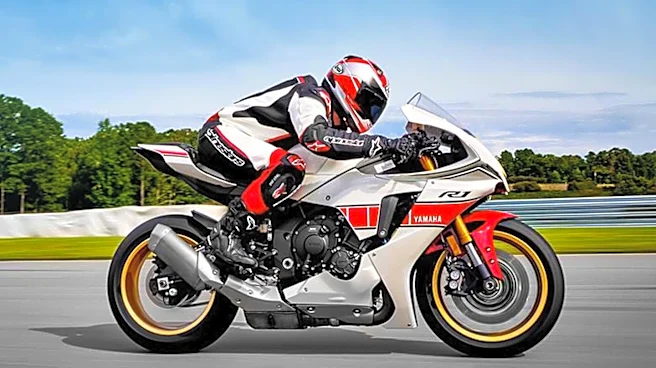
These new rules allowed near-stock, 1000cc multi-cylinder motorcycles to compete, with specific restrictions on weight and engine modifications. These "liter" bikes, such as the Yamaha YZR-R1, Honda CBR954RR, and Suzuki GSX-R1000, were widely available production models, not homologation specials. With minimal modifications, they could achieve performance levels close to the factory-fielded homologation specials, making the series more competitive and affordable for smaller privateer teams. The Suzuki GSX-R1000, in particular, became a recipe for success, leading Yoshimura Suzuki to an unprecedented seven consecutive championships from 2003 to 2009, with Matt Mladin and Ben Spies becoming dominant figures. However, this period also saw Ducati withdraw factory support in 2006, citing unfavorable rules for their two-cylinder motorcycles, and overall participation began to decline.
Challenges and Continuity under Daytona Motorsports Group
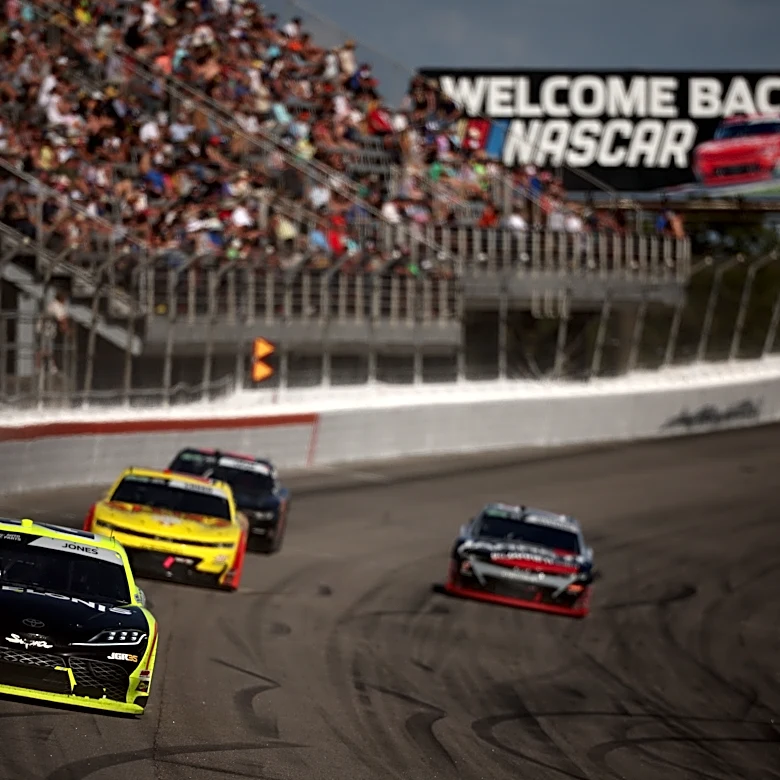
In March 2008, the AMA announced the sale of its sanctioning, promotional, and management rights for AMA Pro Racing to the Daytona Motorsports Group (DMG). The AMA sought to refocus on its core membership activities, hoping that the new ties to NASCAR, through DMG's leadership, would bring an influx of money and publicity to the road racing series. Rule changes for 2009, mirroring those in World Superbike, allowed twin-cylinder bikes up to 1200cc, aiming to enhance competition.
However, the DMG era faced significant challenges, including poor operation and marketing, compounded by the 2008 financial crisis. Honda and Kawasaki factory teams withdrew from the 2009 season, leading to a loss of manufacturer support, sponsors, and fans. The number of races per season was halved, and television coverage diminished. Despite intermittent factory involvement from BMW and KTM, the number of entrants continued to fall, reaching as low as 15 motorcycles at Road America in 2014. Nevertheless, Superbike racing continued, and the Yamaha Factory Racing Team, fielding their YZF-R1, defined this period, winning the championship every year from 2010 to 2016, with riders like Josh Hayes and Cameron Beaubier achieving multiple titles.