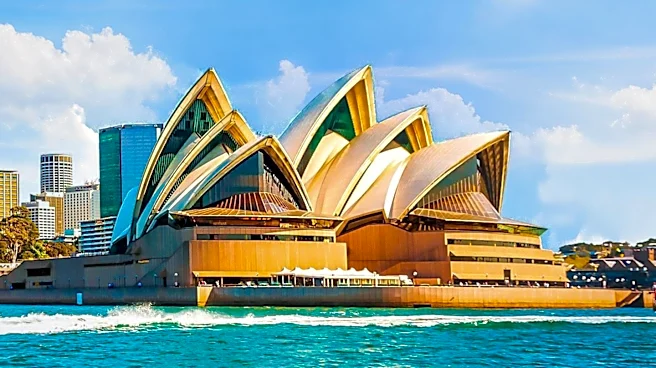

The Sydney Opera House, while celebrated as an architectural marvel, is also a compelling story of human ambition, political maneuvering, and personal conflict. Its construction was not merely an engineering
feat but a complex drama involving the visionary architect Jørn Utzon, various government bodies, and a cast of engineers and contractors. The project became a crucible where artistic integrity clashed with political expediency and financial pressures, ultimately leading to the controversial resignation of its creator and leaving a lasting imprint on the building's history.
The Architect's Vision Meets Political Reality
Jørn Utzon's concept for the Sydney Opera House was hailed as groundbreaking, a design that promised to create "one of the great buildings of the world." However, the initial enthusiasm soon gave way to friction as the project progressed. The Cahill government, the client at the time, insisted on progressive revisions and, according to reports, did not fully grasp the immense costs or the intricate work involved in both design and construction. Tensions were exacerbated by the government's demand for an early start to construction, even though the final designs were incomplete. This premature commencement led to a continuous series of delays and setbacks as technical engineering issues had to be refined on the fly, a challenge compounded by the unique nature of the building.
The relationship between the client and the design team became increasingly strained, particularly after the 1965 election brought the Liberal Party to power, with Robert Askin becoming Premier of New South Wales. Askin had been a vocal critic of the project before taking office, and his new Minister for Public Works, Davis Hughes, proved even less sympathetic. Australian architecture critic Elizabeth Farrelly noted that Hughes, described as having