


The Bengal cat is renowned for its striking appearance, a direct inheritance from its wild ancestor, the Asian leopard cat. This medium to large breed boasts a variety of coat patterns and colors that set it apart from other domestic felines. Beyond its visual appeal, the Bengal cat also possesses unique genetic traits, including specific blood types and patterns, which are a testament to its hybrid origins. Understanding these characteristics provides
insight into what makes the Bengal cat such a distinctive and captivating companion.
Distinctive Appearance and Coat Patterns
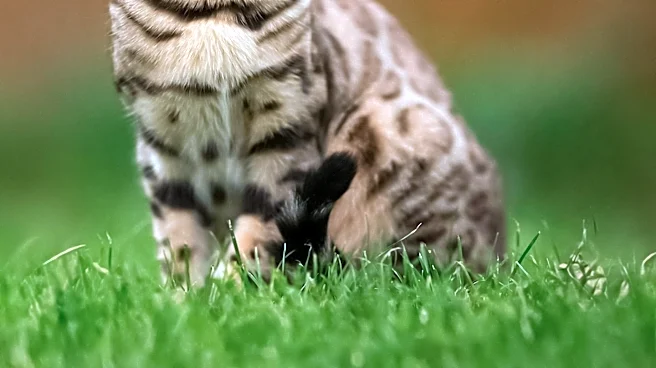
Bengal cats exhibit a wide range of appearances, but their most defining feature is their coat. Their tabby coats can display patterns from domestic spots to more complex hybrid rosettes, arrowhead markings, and marbling. The rosette pattern, in particular, is a unique characteristic among domestic cat breeds, directly inherited from the Asian leopard cat. Domestic cats naturally have four distinct and heritable tabby coat patterns: ticked, mackerel, blotched, and spotted. The Bengal cat's ability to display rosettes is a direct result of its wild gene inheritance.
The colors of Bengal cats can vary significantly. A common example is a black spotted tabby Bengal cat, which might feature tricolored rosettes and a clear coat. These intricate patterns and vibrant colors contribute to the breed's exotic and wild aesthetic, making each Bengal cat a unique work of art. The selective breeding process has focused on enhancing these desirable traits, ensuring the continuation of their distinctive look.
Genetic Insights and Unique Markers
The genetic makeup of the Bengal cat is a fascinating area of study, particularly concerning its coat patterns and other physiological traits. Geneticist Christopher Kaelin, through research conducted at Stanford University in the US, has identified the genes responsible for the spotted and marble patterns in Bengal cats. Kaelin's studies on the color and pattern variations of feral cats in Northern California helped pinpoint the gene that creates the marble pattern, offering valuable insights into the breed's unique markings.
Another interesting genetic aspect of Bengal cats relates to their blood type. A study conducted in the UK tested 100 Bengal cats and concluded that all of them possessed type A blood. While the UC Davis Veterinary Genetics Laboratory in the US has studied domestic cat blood types, noting that most domestic cats fall within the AB system with common A and B types and rare AB types, there is a recognized lack of sufficient samples from Bengals. Consequently, the genetics of the AB blood group in Bengal cats are not yet fully understood, indicating an area for further research.
Early Generations and Breeding Considerations
Bengal cats from the first three generations of breeding, designated as F1, F2, and F3, are known as "foundation" or "early-generation" Bengals. A notable characteristic of these early generations is that the males are frequently infertile. Due to this, female early-generation Bengals are typically bred with fertile domestic Bengal males from later generations to continue the breeding line. It's worth noting that while the terms F2, F3, and F4 were historically used, they are now considered incorrect by some, though many people and breeders still use them.
Historically, long-haired kittens born within Bengal breeding programs were often neutered and excluded from breeding. However, some breeders have since begun to deliberately develop this long-haired variety, often called the Cashmere Bengal. The long-hair trait is believed to have originated from domestic cats used in the breed's foundation, introduced through backcrossing. This trait is governed by a recessive gene, meaning that two carrier Bengals can produce long-haired offspring. Genetic testing, including a test developed by UC Davis, allows breeders to identify carriers for selective breeding, enabling the intentional development of this unique long-haired variant.
The Hypoallergenic Claim and Scientific Scrutiny
Bengal cats are often marketed by breeders and pet adoption agencies as a "hypoallergenic" breed, suggesting they are less likely to cause allergic reactions. It is claimed that Bengal cats produce lower than average levels of allergens. However, as of 2020, this claim has not been scientifically proven. Cat geneticist Leslie Lyons, who directs the University of Missouri's Feline and Comparative Genetics Laboratory, disputes such claims, stating that there is no such thing as a truly hypoallergenic cat. She observes that even allegedly hypoallergenic breeds can still trigger reactions in individuals with severe allergies, advising caution regarding such assertions.