






The success of The Huntley-Brinkley Report, which aired on NBC from 1956 to 1970, was largely attributed to the distinctive personalities and remarkable on-screen chemistry of its co-anchors, Chet Huntley and David Brinkley. Huntley, based in New York City, and Brinkley, reporting from Washington, D.C., created a news program that resonated deeply with American audiences. Their individual styles complemented each other, offering viewers a balanced
and engaging presentation of the day's events. This partnership not only elevated their program to the top of the ratings but also made them household names, surpassing the recognition of many celebrities of their era.
Contrasting Styles, Complementary Strengths
Chet Huntley was widely recognized for his commanding broadcast voice, which critics considered among the best ever heard. His presentation was often described as straightforward and serious, lending an air of gravitas to the news. In contrast, David Brinkley brought a dry, often witty, and incisive approach to newswriting. His ability to craft simple, declarative sentences for the ear earned him a reputation as one of the medium's most talented writers. This contrast between Huntley's earnest delivery and Brinkley's wry observations provided a refreshing alternative to the often sober output from competitors like CBS News. The combination proved highly effective, attracting a large and loyal viewership.
Their unique dynamic was so impactful that a survey for NBC later revealed viewers particularly enjoyed the way the anchors appeared to talk to each other. Despite their strong on-screen rapport, Huntley and Brinkley rarely met in person, operating from different cities. Their only direct communication during the broadcast, apart from their famous sign-off, occurred when one anchor would conclude a story by saying the other's name. This simple act served as a crucial signal to an AT&T technician to switch the long-distance transmission lines, seamlessly transitioning the broadcast between New York and Washington.
Celebrity Status and Cultural Resonance
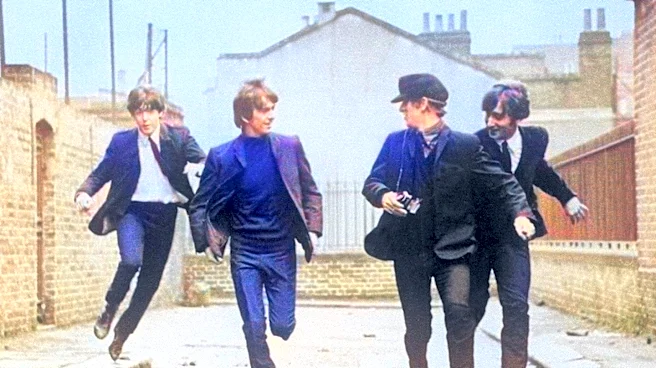
The anchors' distinct personalities and the program's popularity propelled Huntley and Brinkley to significant celebrity. Surveys indicated they were better known than prominent figures such as John Wayne, Cary Grant, Jimmy Stewart, or The Beatles. Their fame was even immortalized in popular culture; in 1961, Frank Sinatra and Milton Berle sang a playful tune describing them as "Huntley, Brinkley/Huntley, Brinkley/One is glum, the other quite twinkly." Newsweek featured them on its cover on March 13, 1961, with a similar tagline: "TV's Huntley and Brinkley: One is Solemn, the Other Twinkly."
This widespread recognition underscored their influence. Entertainer Sammy Davis Jr. was quoted in Life magazine in 1964, stating that watching The Huntley-Brinkley Report was his "only contact with reality." The program's cultural footprint extended to political satire, with Tom Lehrer referencing them in his 1965 song "So Long, Mom (A Song for World War III)." This level of public engagement and admiration solidified their status as iconic figures in American broadcasting, demonstrating how their unique partnership transcended mere news delivery to become a significant part of the national consciousness during the 1960s.