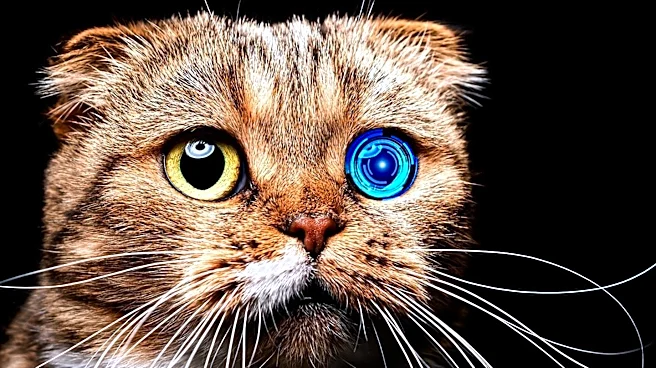

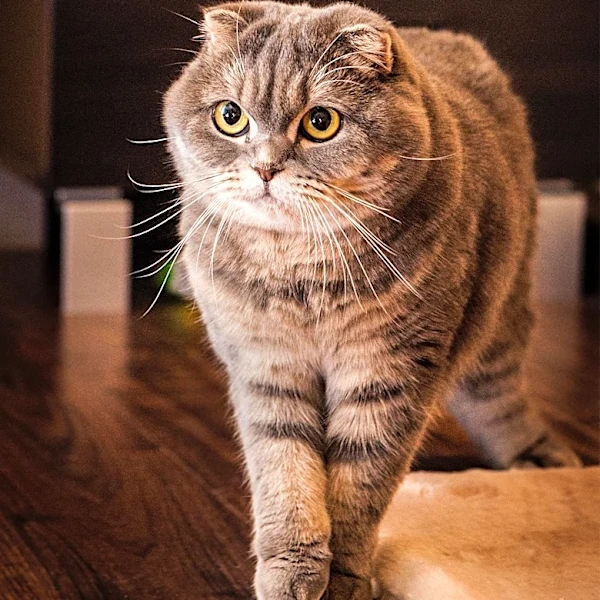



The Scottish Fold is a distinctive domestic cat breed, immediately recognizable by its unique folded ears. This characteristic appearance is not merely a cosmetic trait but the result of a naturally occurring autosomal dominant genetic mutation. This mutation is specifically linked to a condition known as feline osteochondrodysplasia (FOCD), which impacts cartilage development throughout the cat's body. The folded ears, which bend forward and downward
toward the front of the head, contribute to what is often described as an “owl-like” facial expression, making the Scottish Fold a visually captivating and easily identifiable breed.
The Genetic Basis of Folded Ears
The defining feature of the Scottish Fold, its folded ears, stems directly from the autosomal dominant gene responsible for feline osteochondrodysplasia (FOCD). This genetic mutation affects the cartilage, causing it to develop abnormally. While the folded ears are the most apparent manifestation of this condition, the impact of FOCD is more widespread, affecting cartilage development throughout the cat's entire skeletal system. This means that the genetic trait that gives the Scottish Fold its charming appearance is also intrinsically linked to a health condition that can have broader implications for the cat's well-being.The severity of FOCD in heterozygous cats, those with one copy of the mutated gene, can be quite variable and subtle. A 2021 study involving radiologists who assessed radiographs of Scottish Fold and Scottish Straight cats, blinded to their ear phenotype, found that folded-ear cats generally received worse "severity scores." However, the images often showed milder signs than previously published. This variability suggests that other modifier genes or environmental factors like climate, diet, and exercise might influence the expression of the condition. Interestingly, the least affected folded-ear cat in this study was sometimes given an identical or even lower score than the highest-rated straight-ear cat, highlighting the spectrum of the condition's presentation.
Beyond the Ears: Skeletal Implications
While the folded ears are the most famous characteristic, the FOCD mutation also leads to other skeletal issues. Affected cats can develop a shortened and stiff tail that lacks its natural rigidity. More significantly, the condition causes a skeletal dysplasia, which is a disorder of bone and cartilage growth, also known as osteochondrodysplasia. All Scottish Fold cats are prone to developing arthritis, a progressive and often painful condition.Cats that are heterozygous for the mutation develop a progressive form of arthritis, meaning it worsens over time. Homozygous cats, those with two copies of the mutated gene, experience a much more severe and rapidly progressing form of arthritis. In kittens with the condition, exostoses, which are benign bony growths, can form near the tarsal and metatarsal joints. The process of endochondral ossification, which is crucial for bone development, is retarded, and the metatarsal and metacarpal bones may fail to reach their full length and develop abnormally, resulting in improper shapes. These skeletal abnormalities underscore the comprehensive impact of the FOCD gene beyond just the ears.
Treatment and Breeding Considerations
For Scottish Folds suffering from the skeletal manifestations of FOCD, treatment options exist, though they are primarily palliative. These can include radiation therapy and surgery. Surgical interventions might involve excising the exostoses or performing a bilateral pantarsal arthrodesis, which can help alleviate lameness. However, given that all Fold cats will eventually be affected by some degree of arthritis due to their genetic makeup, some researchers advocate for the complete cessation of breeding Fold cats. This recommendation stems from the ethical concerns surrounding a breed where a defining characteristic is inextricably linked to a progressive and potentially painful health condition.Further research has explored the genetic intricacies of FOCD. A 2020 case study described two Scottish Fold mixed cats with severe exostosis in their hind legs, both of whom were homozygous for the Trpv4 mutation. This finding reinforces the hypothesis that homozygous Scottish Folds are typically more severely affected. Another study by Sartore et al. genetically analyzed folded-eared cats and focused on a specific gene variant (c.1024G>T). While only one out of twelve cats showed signs of FOCD, the authors speculated that this particular mutation in the Trpv4 gene might not be the sole factor responsible for the development of FOCD, suggesting a more complex genetic interplay. The ongoing debate and research highlight the challenges and ethical considerations in breeding animals with known genetic health conditions.