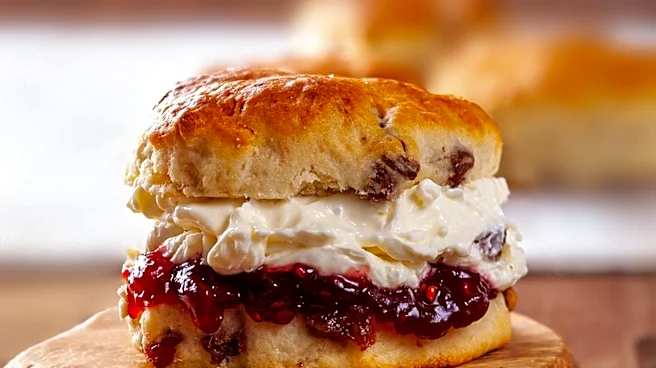
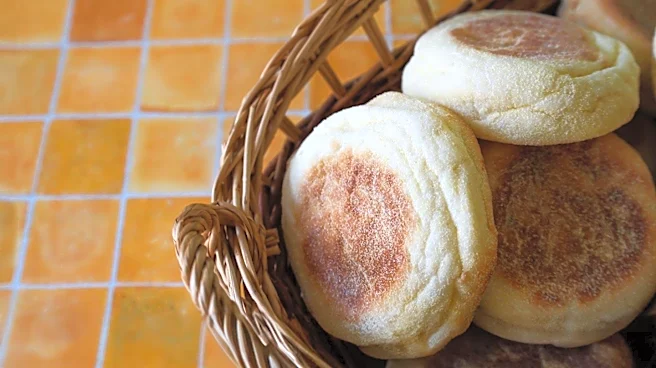
The scone, a baked good deeply embedded in British and Irish culinary traditions, holds a rich history that spans centuries. Popular not only in the United Kingdom and Ireland but also in Canada, Australia, and New Zealand, the scone has evolved from its early forms to become a staple of cream teas and afternoon tea. While the term "scone" in the U.S. often refers to a sweeter, triangular product served on its own, its traditional counterparts are
typically made from wheat flour or oatmeal, leavened with baking powder, and can be either lightly sweetened or savory. This versatile baked item has a documented past, with its earliest written mention dating back to 1480, offering a glimpse into its long-standing presence in European diets.
Early Origins and Culinary Evolution
The earliest written record of the word "scone" appears in a petty customs account from 1480. This account mentions a baker named Frank Mathewe who possessed a small wooden chest containing "400 spice cakes and 500 scone Jesus." The practice of stamping the figure of Jesus onto baked goods during this period indicated that the product was made from the highest grade flour, suggesting scones were a quality item even then. The oldest known written recipe for a scone, titled "Mrs Fellard's scone cake," is preserved in a folio of recipes at the Wellcome Collection and dates from 1669. This early recipe included flour, currants, eggs, sugar, a pint of ale yeast, and cream, providing a foundational understanding of its ingredients. Interestingly, the recipe also offered savory variations, such as one with bacon served with gravy, drawing parallels to modern American biscuits.
Scones Through the Ages: From Griddles to Afternoon Tea
During the Middle Ages, scones played a role in celebratory events, being piled up with biscuits to form wedding cakes. Historical texts also shed light on the scone's place in the diets of different social classes. In the 17th century, poorer classes in Scotland were noted to bake "oat cakes, or the scone of bere or barley" on a griddle. Another historical account from the time of James VI states that poorer people consumed "brose and scarcely anything else, and the scone, the bannock, kirnmilk and the kebbuck or cheese." A significant turning point for the modern sweetened scone came in 1843 with the widespread availability of baking powder, which allowed for the lighter, fluffier texture recognized today.
The Rise of Cream Tea and Modern Popularity
The association of scones with cream tea, a quintessential British tradition, was first explicitly recorded in *The Cornishman* in 1932, though it is believed that Devonians had adopted scones for this purpose even earlier. This tradition was further popularized in the early 19th century by Anna, Duchess of Bedford, who reputedly introduced the practice of enjoying scones with tea as a light refreshment between meals, solidifying the scone's role in afternoon tea. Today, scones are widely accessible, found in bakeries, convenience stores, and supermarkets. A 2005 market report estimated the UK scone market to be worth £64 million, indicating a 9% increase over the preceding five years. This growth is partly attributed to a rising consumer preference for impulse and convenience foods, showcasing the scone's enduring appeal in contemporary society.
The Debate: Bread or Cake?
The classification of a scone—whether it is a bread or a cake—remains a subject of debate. *The Oxford Companion to Food* by Alan Davidson categorizes the scone as a cake, a description echoed by both the Oxford and Cambridge dictionaries. However, some food writers and producers argue that scones occupy a unique culinary space, being richer than bread but not as rich as cake, possessing a distinct texture. Unlike bread, scone dough is lightly worked rather than kneaded, and unlike cake, which is typically made with a batter, scones use a dough. The Food Standards Australia New Zealand agency acknowledges this distinction by classifying scones not as bread or cake, but within their own category: "Scones and Rock Cakes," highlighting their unique identity in the world of baked goods.