

The 1980 season marked a pivotal moment for the Kansas City Royals, as the team finally broke through years of playoff frustration to capture their first American League pennant. This breakthrough was particularly sweet, coming after a history of close calls and defeats against a formidable rival. The Royals' journey to the World Series that year was a culmination of years of building a competitive team, showcasing both individual brilliance, notably
from George Brett, and collective resilience. Their appearance in the Fall Classic represented a significant milestone for the franchise and captivated baseball fans across the nation.
Breaking the Yankee Barrier
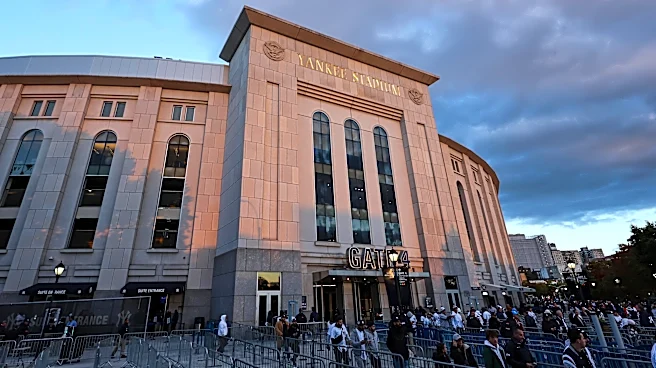
For several years leading up to 1980, the Kansas City Royals had established themselves as a dominant force in the American League West. From 1975 to 1978, the team achieved 90 or more wins in four consecutive seasons, demonstrating their consistent strength. However, their path to the World Series was repeatedly blocked by the New York Yankees, who defeated the Royals in three straight American League Championship Series (ALCS) from 1976 to 1978. These repeated losses created a significant rivalry and a sense of unfinished business for the Kansas City club.
The 1980 playoffs offered the Royals a chance at redemption, and they seized the opportunity decisively. In a stunning turn of events, Kansas City swept their rival Yankees in three games to win the American League pennant. This victory was not just a win; it was a statement, finally overcoming the team that had denied them World Series berths for years. The sweep was a testament to the Royals' growth and determination, signaling their arrival as a true championship contender.
A Pivotal Play in the ALCS
Beyond the overall sweep, a specific defensive play in Game 2 of the 1980 ALCS highlighted the Royals' grit and George Brett's crucial role. In the top of the eighth inning, with two outs and the Royals holding a slim one-run lead, the Yankees had Willie Randolph on first base. Bob Watson hit a ball into the left field corner of Royals Stadium. Willie Wilson, known more for his speed than his arm strength, retrieved the ball. Third base coach Mike Ferraro waved Randolph home, attempting to tie the game.
Wilson's throw overthrew U L Washington, the cut-off man, creating a dangerous situation. However, George Brett, demonstrating his awareness and athleticism, was positioned behind Washington. Brett caught the errant throw and quickly relayed the ball to catcher Darrell Porter, who successfully tagged out Randolph as he slid into home plate. Television cameras captured a visibly furious George Brett after the play, underscoring the intensity and high stakes of the moment. This critical defensive effort preserved the Royals' lead and was a defining moment in their pennant-winning series.
First-Time World Series Contenders
The Kansas City Royals' 1980 American League pennant marked their first appearance in the World Series. As an expansion team formed by pharmaceutical executive Ewing Kauffman after the Athletics relocated to Oakland, the Royals began play in 1969. They quickly became competitive, achieving a winning record in their third season with an 85-76 record. Their 1980 World Series berth made them only the second expansion team, and the first from the American League, to reach the Fall Classic. Notably, George Brett's brother, Ken Brett, was added to the Royals roster in August 1980, making them teammates during this historic season.
In the World Series, the Royals faced the Philadelphia Phillies, who were also seeking their first championship as an original National League team. The series was a hard-fought battle, ultimately seeing the Royals fall to the Phillies in six games. Despite the loss, the Royals' journey was historic. George Brett contributed with a home run in Game 3, showcasing his offensive power on the biggest stage. However, the series also saw Willie Wilson set an unfortunate World Series record by striking out 12 times in the six-game set, a stark contrast to his 230 hits and 81 strikeouts during the regular season. Game 6, the series finale, was particularly notable, becoming the most-watched game in World Series history with a television audience of 54.9 million viewers, highlighting the national interest in this clash of first-time champions.