







Over-the-air (OTA) updates have become a cornerstone of modern device management, enabling wireless delivery of software and firmware improvements. This technology, which allows updates via Wi-Fi or cellular networks, has transcended its origins in mobile phones to become critical in diverse sectors, including automotive and the burgeoning Internet of Things (IoT). The widespread adoption of OTA updates is driven by their ability to reduce costs,
increase the speed of software deployment, and enhance the overall user experience by keeping devices current and secure.
Smartphones: Pioneering the OTA Revolution
Smartphones and tablets were among the first devices to widely embrace over-the-air updates, fundamentally changing how users interact with their devices' software. Before OTA, updating these devices often meant connecting them to a computer via USB. This was inconvenient and limited the frequency of updates. With OTA, users can download and install updates directly from the internet, receiving new features, security patches, and bug fixes seamlessly.The implementation of OTA updates varies between major mobile operating systems. Apple's iOS, which gained OTA support in iOS 5, benefits from Apple's exclusive distribution model, leading to high adoption rates for major releases. In contrast, Android's OTA updates are distributed by device manufacturers and sometimes wireless carriers, rather than directly by Google. This decentralized approach historically led to fragmentation and delays in security updates. However, Google has addressed these issues with initiatives like Project Treble (2017), which simplifies OS updates for OEMs, and Project Mainline (2019), which allows Google to deliver updates to core Android components and security patches directly through the Play Store, reducing reliance on intermediaries. Additionally, Android 8.0 introduced an A/B partition scheme, enabling updates to be installed in the background and applied upon reboot, minimizing downtime.
Automotive: Driving Innovation and Safety
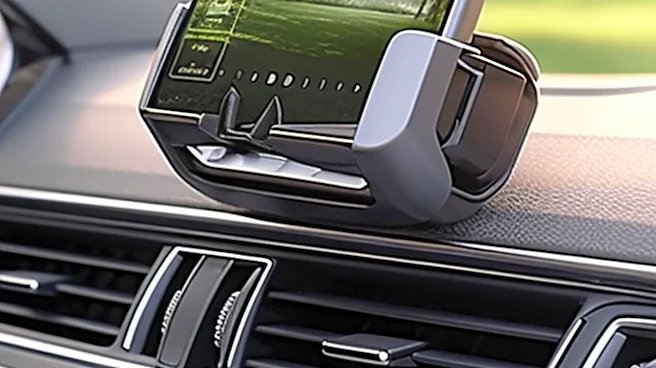
In the automotive industry, OTA updates are transforming how vehicles are maintained and improved. Modern cars can receive OTA updates for various systems, including their in-car entertainment, navigation maps, telematics control units, and electronic control units that manage most vehicle operations. These updates are typically delivered via cellular networks, similar to smartphones. While a car cannot be driven during an update, the process includes rigorous checks for authenticity and system integrity before and after installation.The benefits for the automotive sector are substantial. OTA updates eliminate the need for costly and inconvenient recalls for software-related issues, such as those previously seen with emissions control software or safety-critical bugs affecting brakes or airbags. This reduces warranty costs for manufacturers and minimizes downtime for customers. Furthermore, OTA updates enable manufacturers to rapidly deploy new features and bug fixes, enhancing market competitiveness and accelerating improvements in areas like driver assistance systems and overall vehicle safety. This continuous improvement model allows cars to evolve and adapt throughout their lifespan, offering a dynamic ownership experience.
Internet of Things (IoT): Remote Management for Distributed Devices
The Internet of Things (IoT) represents another critical frontier for OTA updates, often referred to as Firmware Over-the-Air (FOTA). IoT networks can consist of hundreds or thousands of sensor nodes and other embedded devices, many of which are located in remote or difficult-to-access environments. In such scenarios, physical access for updates is impractical and expensive.OTA updates for IoT devices often operate on unlicensed frequency bands (like 868 MHz, 900 MHz, and 2400 MHz) and are designed for low power consumption and low data rate transmissions, utilizing protocols such as 802.15.4 and Zigbee. This capability allows for firmware upgrades without physical intervention, saving significant time and money. For example, systems like Libelium's OTA programming for Zigbee Wireless Sensor Network (WSN) devices enable remote updates, ensuring that distributed sensor networks can be maintained and improved efficiently, even in challenging locations. This highlights the versatility and essential nature of OTA technology in managing an increasingly connected world.