



American football is governed by a comprehensive set of rules that dictate how points are scored, how the game clock operates, and how teams advance the ball. These regulations ensure fair play and create the strategic framework that makes the sport so engaging. From the high-value touchdown to the less common safety, and from the precise timing of the game clock to the critical concept of downs, understanding these fundamental rules is essential
for any fan of the game.
Scoring: The Path to Victory
In American football, the team with the most points at the end of the game wins. The most valuable scoring play is the touchdown (TD), worth six points. A touchdown is achieved when a live ball is advanced into, caught, or recovered in the opposing team's end zone. After a touchdown, the scoring team attempts a "try," commonly known as the point(s)-after-touchdown (PAT) or conversion. This offers a single scoring opportunity: a place kick or drop kick through the goal posts is worth one point (an extra point), while scoring by what would normally be a touchdown is worth two points (a two-point conversion). Extra points are far more common due to their higher success rate compared to the riskier two-point conversion.A field goal (FG) is worth three points and is scored when the ball is place kicked or drop kicked through the uprights and over the crossbars of the defense's goalposts. Place kicks are the standard method for field goals, as the modern football's shape makes reliable drop kicks difficult; the last successful scoring drop kick in the NFL before 2006 was in 1941. After a PAT attempt or a successful field goal, the scoring team must kick the ball off to the other team. The least common method of scoring is a safety, worth two points, awarded to the defense when the ball carrier is tackled in their own end zone. The team conceding the safety must then kick the ball to the scoring team via a free kick.
Game Duration and Time Stoppages
Professional and college football games are 60 minutes long, divided into two 30-minute halves and four 15-minute quarters. High school games are slightly shorter, at 48 minutes, with four 12-minute quarters. A halftime period separates the two halves, and short breaks follow the first and third quarters. Before the game, a coin toss determines which team receives or kicks off, or which goal they defend, with the winner having the option to defer their choice to the second half. Teams switch goals after the first and third quarters.Games often extend beyond their defined length due to numerous play stoppages; an average NFL game, for instance, lasts over three hours. The game clock measures the overall duration, controlled by an operator based on official directions. Additionally, a separate play clock dictates the amount of time the offense has to initiate a play. It's set to 25 seconds after administrative stoppages and 40 seconds when play proceeds without such interruptions. Failure to start a play before the play clock reaches "00" results in a delay of game foul against the offense. If a down is in progress when a quarter ends, play continues until the down is completed, and certain fouls can even extend a quarter through an untimed down.
Advancing the Ball and the Concept of Downs
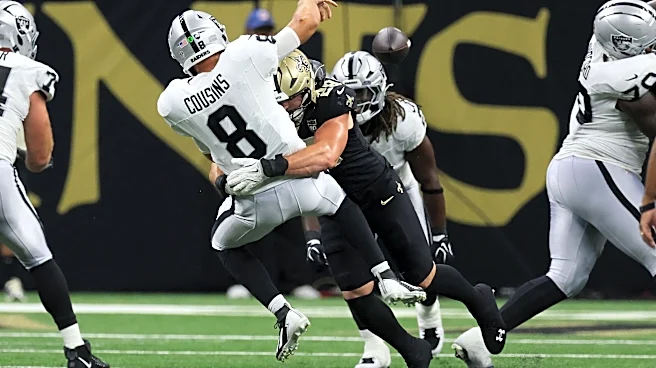
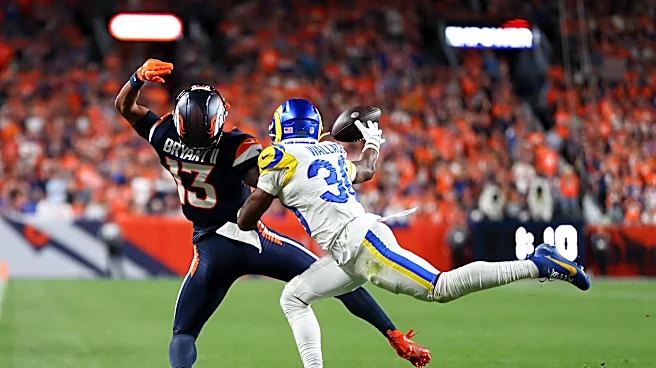
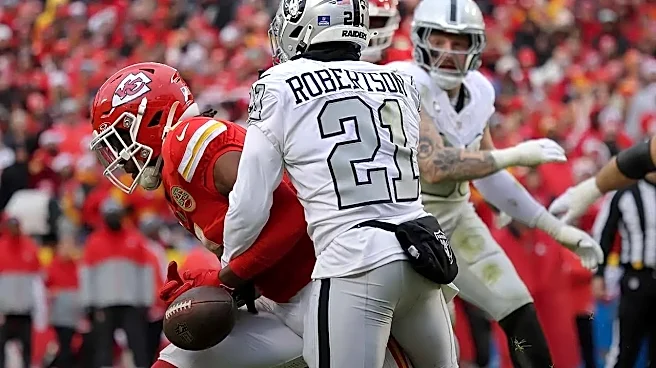
The offense has two primary ways to advance the ball: running and passing. A play typically begins with the center snapping the ball backward between their legs to the quarterback. The quarterback then hands off, throws, or runs with the ball. A play concludes when the player with the ball is tackled, goes out-of-bounds, or an incomplete pass hits the ground. A forward pass can only be legally attempted if the passer is behind the line of scrimmage, and only one forward pass is allowed per down. Players can also pass the ball backward at any point during a play. In the NFL, a down also ends immediately if the runner's helmet comes off.The offense is given a series of four plays, known as downs, to advance the ball at least ten yards. If they succeed, they are awarded a new set of four downs. If they fail to gain ten yards, possession of the football is turned over to the defense. In most situations, if the offense reaches their fourth down and is not in field goal range, they will punt the ball to the other team to force them to start their drive farther down the field. A group of officials, the chain crew, meticulously tracks both the downs and the distance measurements, with the spot needed for a first down known as the line to gain. On television broadcasts, a yellow line is electronically superimposed on the field to visually indicate this line to the audience.