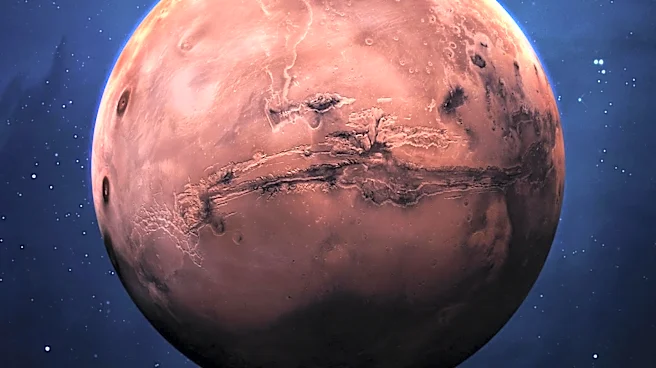





While the existence and basic characteristics of Mars's moon Deimos are well-established, its ultimate origin remains one of the most significant and controversial questions in planetary science. Unlike Earth's Moon, which is widely believed to have formed from a giant impact, the smaller Martian satellites present a more complex puzzle. Scientists continue to debate how Deimos came to orbit Mars, with two primary hypotheses dominating the discussion:
capture and accretion. Understanding its genesis is crucial for unraveling the early history of the Martian system and the broader processes of planet formation.
The Core Question of Origin
The origin of Mars's moons, including Deimos, is currently unknown, making it a subject of ongoing scientific controversy. This lack of a definitive explanation highlights the challenges in reconstructing the distant past of our solar system. The small size and irregular shape of Deimos, along with its orbital characteristics, do not immediately point to a single, clear formation mechanism. Instead, these features have led to the development of competing theories, each with its own set of supporting arguments and unresolved questions. The mystery surrounding Deimos's birth underscores the dynamic and often violent processes that shaped the planets and their satellites billions of years ago.
Scientists are particularly interested in whether Deimos formed alongside Mars from the same protoplanetary disk, or if it was a later addition to the Martian system. The answer to this fundamental question has implications not only for Deimos itself but also for our understanding of how planetary systems evolve and how common different types of moon formation might be throughout the universe. The controversy surrounding its origin fuels continued research and observation.
Competing Hypotheses: Capture vs. Accretion
The main hypotheses regarding Deimos's origin are that it formed either by capture or by accretion. The **capture hypothesis** suggests that Deimos was originally an asteroid from the main asteroid belt, located between Mars and Jupiter. According to this theory, Deimos, while traversing its own orbit, passed too close to Mars and was subsequently pulled into a stable orbit by the planet's gravitational field. This scenario is supported by the irregular shape of Deimos, which is characteristic of many asteroids, and its composition, which is thought to be similar to that of carbonaceous chondrites found in the asteroid belt.
Conversely, the **accretion hypothesis** proposes that Deimos formed in situ, meaning it coalesced from the same material disk that formed Mars itself. This theory suggests that as Mars grew, a surrounding disk of dust and gas eventually clumped together to form its moons. However, the small size and irregular shape of Deimos make this hypothesis more challenging to reconcile without additional mechanisms, such as a subsequent impact event that might have disrupted a larger, more regularly shaped moon. Both hypotheses have their merits and their difficulties, contributing to the ongoing debate.
Ongoing Research and Debate
The scientific community continues to investigate the origin of Deimos, with various studies and observations contributing to the discussion. Researchers like J. A. Burns have highlighted "Contradictory Clues as to the Origin of the Martian Moons," indicating the complexity of the evidence. For instance, the orbital history of the Martian satellites has been analyzed, with inferences drawn about their origin. Studies such as those by Cazenave, Dobrovolskis, and Lago in 1980 explored the orbital history to shed light on their formation.
The ongoing debate is further fueled by the need for more direct evidence, which future missions to Mars and its moons aim to provide. Understanding whether Deimos is a primordial remnant of Mars's formation or a later interstellar visitor has profound implications for planetary science. The controversy surrounding its origin ensures that Deimos remains a focal point for research, with scientists continually refining models and seeking new data to definitively answer the question of how this small, distant moon came to be.