



On August 19, 1995, the boxing world turned its attention to the highly anticipated return of Mike Tyson. Billed as "He's Back," this professional boxing match against Peter McNeeley marked Tyson's re-entry into the sport after a significant four-year absence. His time away was due to a 1991 arrest and subsequent 1992 conviction for rape, which led to a three-year prison sentence. The fight was not just a sporting event; it was a cultural moment,
signaling the comeback of one of boxing's most formidable figures.
The Anticipated Comeback and McNeeley's Challenge
Mike Tyson's return was met with immense public interest, especially given his long hiatus. His opponent, Peter McNeeley, an American heavyweight boxer born in 1968, was perhaps best known for this very fight. Leading up to the bout, McNeeley had achieved a No. 7 ranking by the World Boxing Association (WBA) and a No. 10 rank by the WBC by early 1995. He had also gained some national exposure, including a Showtime appearance on March 17, 1995, where he secured a second-round knockout. McNeeley even set a then-world record for the fastest knockout in a professional match on April 22, 1995, by stopping Frankie Hines in just six seconds. Despite his accomplishments, he was originally scheduled for a WBC World Heavyweight title shot against Oliver McCall, but this was blocked because he wasn't ranked in the top 10 at that point. Promoter Don King then offered McNeeley the bout against Tyson, who was about to be released from prison.
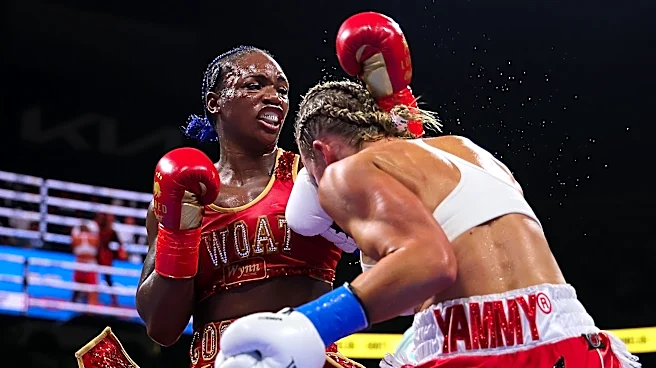
McNeeley approached the fight with a bold attitude, famously stating he would wrap Tyson in a "cocoon of horror." This aggressive pre-fight rhetoric set the stage for what many expected to be a dramatic encounter. The fight itself, however, was remarkably brief, lasting only 89 seconds. From the opening bell, McNeeley launched an aggressive attack, throwing wild punches at Tyson. Tyson, known for his defensive skills and powerful counter-punches, managed to evade these initial assaults.
The Swift Conclusion and Disqualification
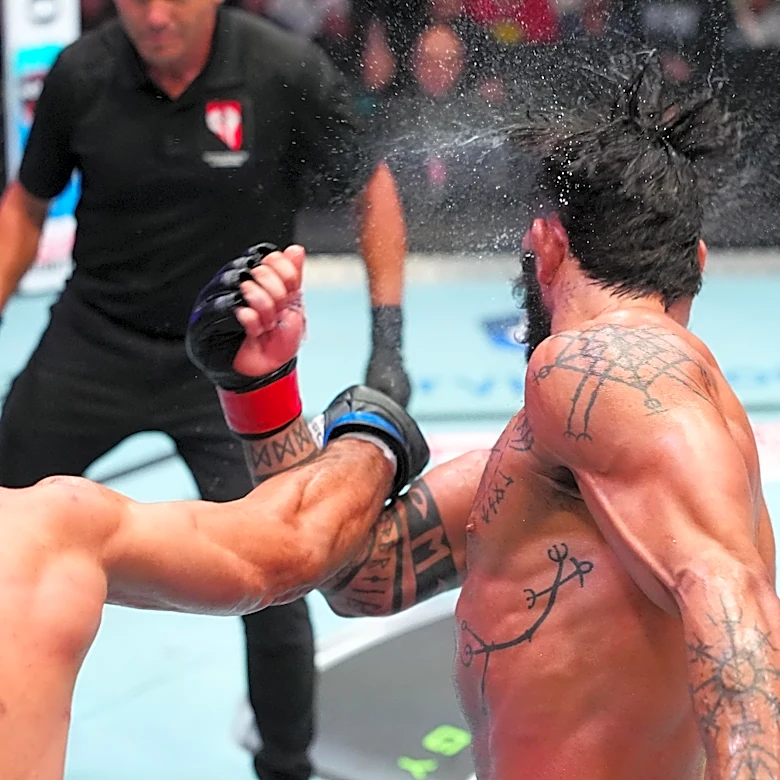
Less than 10 seconds into the fight, Tyson landed a straight right hand that sent McNeeley to the canvas. Referee Mills Lane administered a standing eight-count, and McNeeley was allowed to continue. Undeterred, McNeeley resumed his aggressive approach, exchanging punches with Tyson in the corner. However, the momentum quickly shifted again. Less than 20 seconds later, Tyson delivered a right uppercut that once more sent McNeeley down. It was clear that McNeeley was hurt from this exchange. At this critical moment, his manager, Vinnie Vecchione, entered the ring to prevent his fighter from enduring further punishment. This action resulted in McNeeley's disqualification, handing Tyson an easy victory.
The fight's abrupt ending, while a win for Tyson, also generated significant discussion. TV Guide later included the fight in their 1998 list of the "50 Great TV Sports Moments of All Time," highlighting its memorable, if brief, nature. Despite the loss, McNeeley gained considerable exposure from the event, leading to appearances in TV commercials and speaking engagements. For Tyson, the victory, though short, restored his standing. Following this win, his rank as the number one heavyweight was reinstated by two of the three major boxing organizations, the WBA and WBC.
Tyson's Path After McNeeley
With his comeback fight successfully concluded, Mike Tyson quickly moved on to his next challenge. Only days after his victory over McNeeley, it was announced that he would face Buster Mathis Jr. The bout was initially scheduled for November 4, 1995, at the MGM Grand Arena. This second comeback fight was crucial for Tyson before he would contend for one of the three World Heavyweight titles. The Tyson-Mathis fight underwent several changes in scheduling and broadcasting. It was initially planned to air on Showtime, competing with a highly anticipated pay-per-view match between Riddick Bowe and Evander Holyfield on HBO. However, Tyson's promoter, Don King, later announced that the Tyson-Mathis match would be broadcast for free on Fox, a move that surprised the boxing world.
Complications arose when Tyson suffered a broken thumb three weeks before the fight, leading to its cancellation on November 1. The bout was then rescheduled for December 16 in Atlantic City, with Showtime regaining the broadcasting rights. However, New Jersey gaming authorities ruled against holding the fight in Atlantic City due to Don King's suspension in the state since 1994 because of legal troubles. Ultimately, on November 30, Philadelphia's CoreStates Spectrum was announced as the new venue, and Fox once again secured the rights to air the fight. The Fox telecast primarily focused on the Tyson bout and a Norris vs. Vaden undercard match. Buster Mathis Jr. entered the fight as a significant underdog, with odds of 25 to 1 against him. Tyson continued his winning streak, defeating Mathis Jr. by knockout. These two victories, against McNeeley and Mathis Jr., set the stage for Tyson to reclaim a world title, which he did by defeating Frank Bruno via third-round knockout to capture the WBC Heavyweight title.