


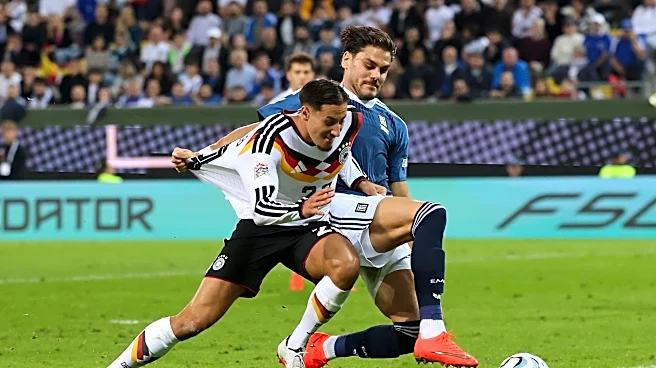

For many years, the German Bundeswehr utilized the Physical Fitness Test (PFT) as a crucial tool to assess the physical capabilities of its soldiers. This test was a mandatory requirement for conscripts both before and after their general basic training, and also for temporary and career soldiers on an annual basis. Beyond its regular application, the PFT played a significant role in the evaluation process for officer candidate selection centers (OPZ)
and recruitment centers (ZNwG). Its comprehensive nature meant that the entire PFT could contribute up to 100 out of a possible 500 points to the overall score in the sports test at the Officer School of the Army, highlighting its importance in military training and career progression.
Structure and Execution of the PFT
The PFT was composed of five distinct exercises, which had to be completed in a specific sequence. The first four exercises were typically conducted indoors in a sports hall, while the final exercise, a 12-minute run, offered flexibility, allowing it to be performed either indoors or on a 400-meter track. This structured approach ensured consistency in testing conditions, although the varying environments for the run provided some adaptability. The test was designed to evaluate different aspects of physical fitness, from agility and strength to endurance, making it a comprehensive assessment for military personnel.
The Five Core Exercises
The first exercise was the shuttle run, covering a distance of 4x9 meters. Candidates had to run back and forth four times as quickly as possible, ensuring that a part of their body crossed the finish line each time. This tested agility and quick directional changes. Following this, the sit-up exercise required candidates to lie on a mat with hands behind their head and knees bent at approximately a 90-degree angle, with a partner holding their feet. Within 40 seconds, they had to raise their upper body until their elbows touched their knees as many times as possible, measuring abdominal endurance.
The third exercise was the standing long jump, where candidates, without a running start, had to jump as far as possible from a standing position. This assessed explosive leg power. Next was the push-up exercise, performed from a prone position on the hall floor with hands touching behind the back. Within 40 seconds, candidates had to push themselves up, release one arm, touch the other forearm with that hand, and return to the starting position as many times as possible. This complex movement tested upper body strength and coordination. The final exercise was the 12-minute run, where the objective was to cover the longest possible distance within the allotted time, a direct measure of cardiovascular endurance.
Scoring and Passing Requirements
Scoring for the PFT involved different performance tables for men and women, acknowledging physiological differences. A maximum of 6 points could be earned per exercise. To successfully pass the overall test, a candidate needed to achieve a minimum total of 15 points. Crucially, no single discipline could have a score lower than 2 points. However, for specific evaluations at the OPZ and ZNwG, a score of 6 points was considered "passed" for the entire test, and even 1 point in a discipline was sufficient to pass that individual discipline in these contexts. This nuanced scoring system allowed for both a general fitness assessment and specific evaluations for recruitment and officer selection. The PFT was eventually replaced by the Basis-Fitness-Test on January 1, 2010, marking an evolution in the Bundeswehr's approach to physical fitness assessment.